Standing on the shoulders of giants
Jimena Alamo, University of Bath Students’ Union President (2023/24, 2024/25)
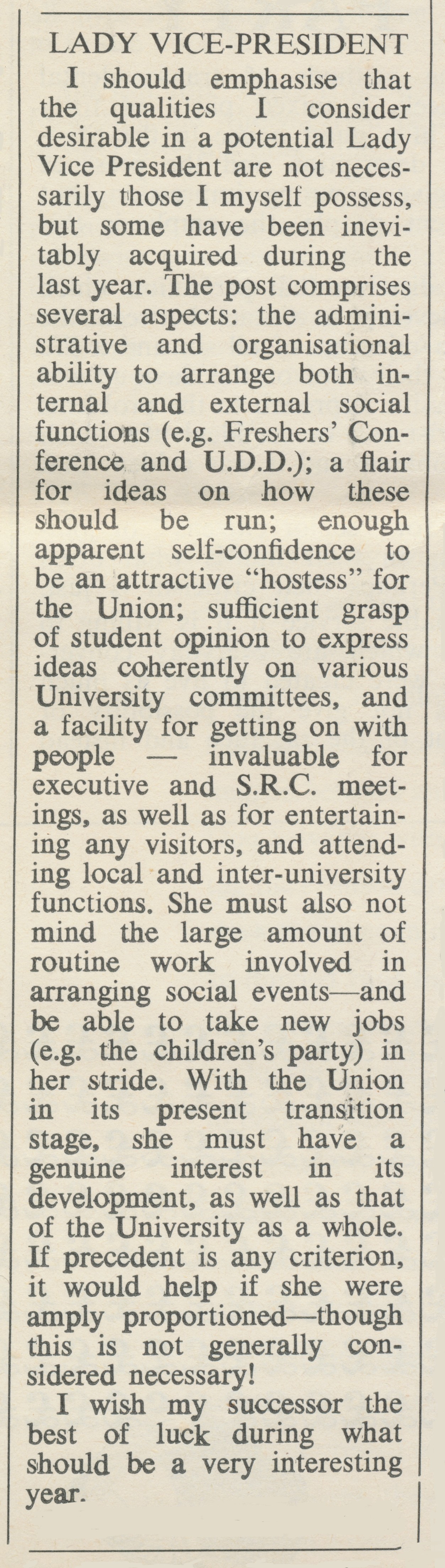
Jimena Alamo takes a look back at changes in the roles and responsibilities of University of Bath Students’ Union officers over the years
“If I have seen further, it is by standing on the shoulders of giants”. This quote by Sir Isaac Newton has always been one of my favourite ones to refer to any successes of the Students’ Union in the last two years under my presidency. At the time of my first election, in February 2023, during my final year as an undergraduate in Politics and International Relations, none of the candidates had to even consider their gender to be an impediment - and much less - a requirement, for the role. I think it’s immensely important for us to recognise that this inherent and assumed equality of gender - at least when it comes to representing students and getting elected - comes from the millions of steps our predecessors took for us.

Learning about the role of Students’ Union Lady Vice-President in 1968 came to me as a surprise when having a conversation with Lizzie Richmond, our University Archivist. This female role entailed organising social events and representing students at different university meetings. It also involved, what is in my opinion the most traditionally gendered of all tasks, being the Union’s “hostess”.
In all honesty, in 2025, I still do all those different tasks, and I’m still expected to have “a facility for getting on with people”. But there are two important differences: these responsibilities now fall on all Students’ Union officers, regardless of their role and gender; and I was able to run for and was successful in being elected as, president of the entire Students’ Union. If it wasn’t for women who were willing to take a somewhat reductive title for the chance to be in the room and prove that we were every bit as capable of doing the job, I might not be where I am today. So, thank you, to all those giants that’ve lent me their shoulders.
My final lines are just to highlight the level of influence that the Students’ Union still holds to this day. We’re still involved in as many - if not more - university committees and bodies; we now represent close to 23,000 students at a local, regional, and national level; and we continue to look after all things student experience (club and society events, socials, balls, and even some trips). I can only hope that, in fifty-odd years, one of my successors is listing all the ways they continue to support and enrich student life and how our work back in 2025 set them up for success.