‘Gay Lib Think In’
Dr Alice Motes (she/they), Senior Data Librarian, Research Data Services, The Library
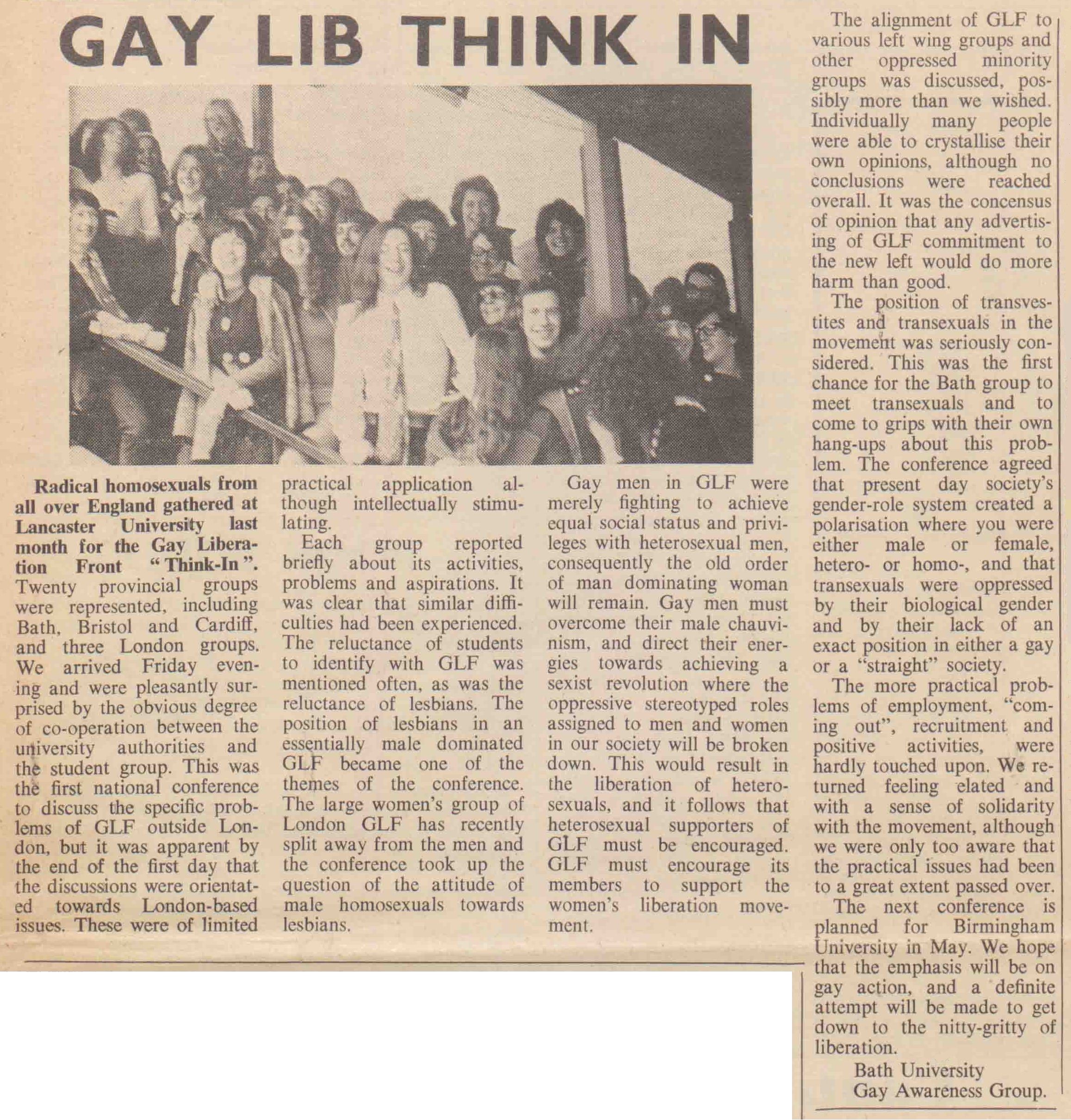
Dr Alice Motes reflects on changes and continuities in the LGBT movement over the last 50 years.
Despite being published over 50 years ago, this article grapples with many of the same issues that the modern LGBT rights movement still faces when trying to form coalitions. Gay men and lesbians have had different experiences. Men’s homosexuality was often formally criminalized, whereas women’s often wasn’t. Lesbians were subject to sexism and gay men could be sexist. Gay men and lesbians also wouldn’t have had much occasion to socialize together. In the article, we see that lesbians split from the GLF because of how male dominated it was, citing the need for the men to “overcome their male chauvinism” and to embrace the women’s liberation movement.
Similarly, the trans rights movement has distinct grievances from gays and lesbians, e.g. legal recognition of their gender identity or access to gender affirming healthcare. However, they are often lumped in with the gay rights movement. I must admit, when the author mentioned “transvestites and transexuals”, I braced myself. Instead, I was pleasantly surprised by the fairly nuanced understanding of how polarised gender roles and sexual identities left trans people at the time adrift between movements. Sadly, the author doesn’t offer any solutions or even any conclusion – did the trans contingent get endorsed or embraced by GLF?
It surprised me that even in 1972 folks were wrestling with how a patriarchal society with strict gender roles was the root of their oppression. Naively, I thought this was a more recent understanding about how gay and trans movements connect. Namely, that the sexist essentialist idea that someone’s physical characteristics (sex) determines 1) your gender, 2) your sexuality (i.e. straight) and 3) how you behave or carry yourself (e.g. men must be manly). In fact, all those things can vary! Trans people can be gay; masculine women can be straight, etc.
Interestingly, the article also refers to other leftist groups and oppressed minorities. Much like more contemporary gay rights movements, they shied away from including class and race politics to appear more mainstream and assimilationist (e.g. marriage equality). The author even appeals to how straight people will benefit from the liberation from strict gender roles! These tensions are still present in current politics. The current moral panic over trans people in sports/bathrooms is born from sexist essentialist beliefs and it’s forcing queer movements to address the unique challenges of the trans members of their community. What would a modern version of the GLF do?