Rising to the challenge of sustainability
Professor Phil Taylor, Vice-Chancellor
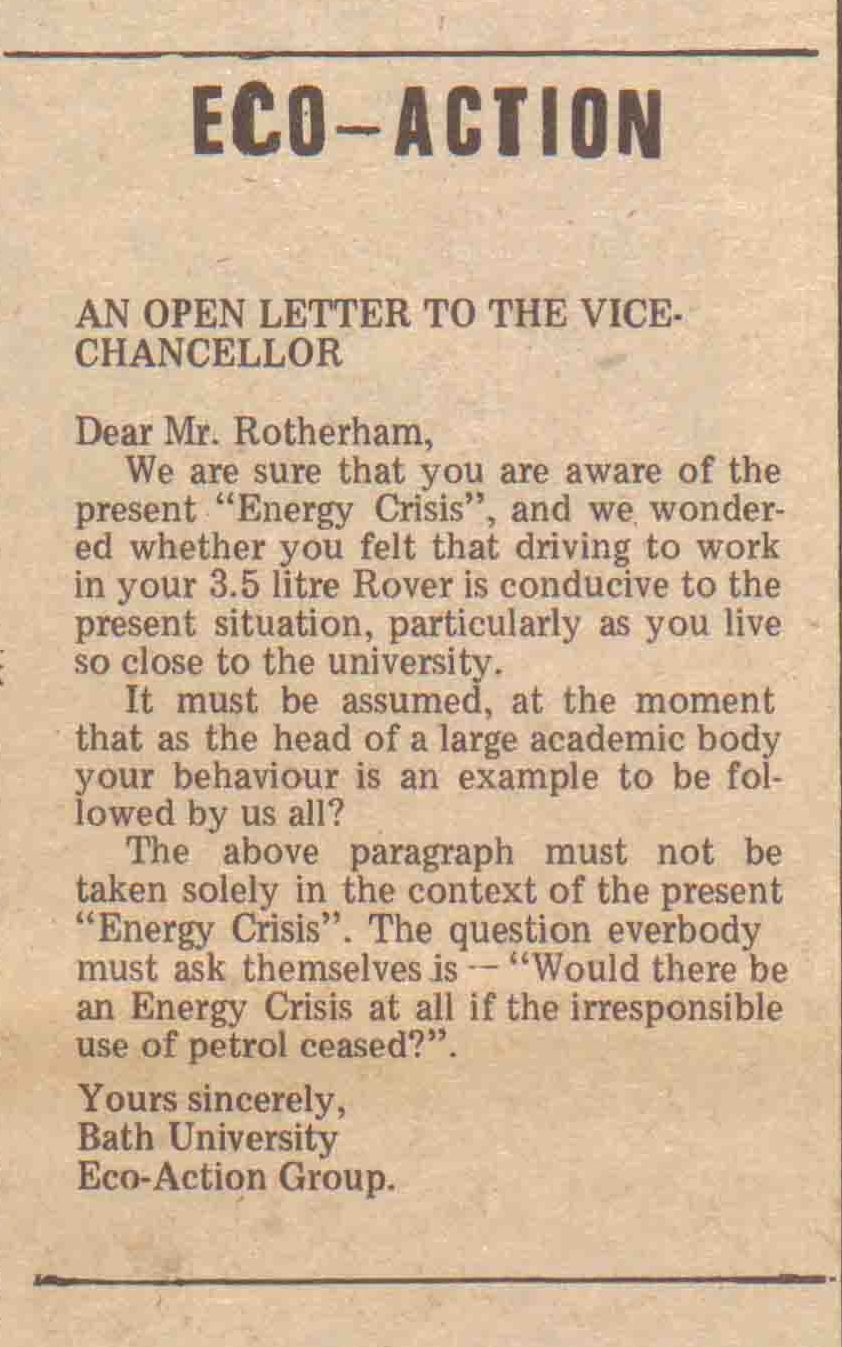
Vice-Chancellor Professor Phil Taylor reflects on the important contribution made by early, student-led ‘eco-action’ initiatives to the gathering momentum of institutional sustainability progress.
Back to the Future
One of the things I value most about students is the motivation and challenge they bring to a community. This article is a great reminder that even as far back as 1974, students were actively campaigning for climate action. Their challenge, shaped by the backdrop of the 1970s petrol shortages, is still pertinent today: ‘Would there be an energy crisis at all if the irresponsible use of fossil fuels ceased?’ This feels especially poignant today as we face another energy crisis triggered by the distressing conflict in the Middle East, leading to the closure of the Strait of Hormuz. It is worth noting that wind and solar energy is largely immune from being trapped in the Strait of Hormuz.
I think, it is fair to say that in the 1970s sustainability and climate change were not at the forefront of everyone’s minds or particularly high up on the country’s economic and political agenda. But universities have always been key players in anticipating, explaining and showcasing global issues such as this through research, education and the student voice. We might be experiencing a form of deja-vu in the wider world but there is positive change happening, and I am proud of the way our inclusive international university community is rising to the challenge of sustainability.
Proud of our progress
Having strengthened the foundations for this work in recent years, we will by the end of this year launch a new Institutional Strategy that keeps sustainability at its core helping to shape a healthier, more sustainable future. It’s about how we carry out our research, education, operations and engagement in ways that support environmental health and climate action, promote social responsibility, equity and inclusion, whilst remain economically and financially sustainable.
Bath has already made significant strides in reducing emissions. Since 2005, Scope 1 and 2 emissions have fallen by 46%, thanks largely to energy efficiency initiatives and the decarbonisation of the UK electricity grid. Even as the University has grown, emissions per square metre have been cut by almost two thirds. We have recently switched our electricity tariff to a renewable tariff, meaning that all our electricity now comes from renewable energy. Progress is being driven by practical action across campus. New carbon and sustainability standards now apply to major developments, with the R7 Residential project set to become the University’s first Passivhaus building. An Energy Strategy and Decarbonisation Plan is in place, prioritising electrified heat, smarter energy systems and resilience, alongside upgrades to lighting, building controls and heating efficiency. Biodiversity is also being strengthened through the University’s ecology masterplan.
We signed the Concordat for the Environmental Sustainability of Research and Innovation in early 2025. Work is progressing on sustainable research infrastructure, equipment sharing and staff training. In education, carbon literacy training, Climate Fresk workshops and sustainability-focused projects are well established, with a new Education and Sustainability Framework to be piloted from 2026/27. Behind the scenes, there’s plenty happening to reduce waste, make better use of what we have, and support more sustainable travel - including circular economy initiatives, the launch of Warp It, and a new Travel Plan shaped by lots of staff and student feedback.
External recognition reflects our progress, with Bath rising from 127th to 56th in the QS Sustainability Rankings between 2024 and 2025. As the Sustainability Plan develops, the focus remains firmly on turning ambition into action and embedding sustainability into everyday life at Bath.
I sincerely hope that the authors of this article would be proud of our commitment and progress. I certainly am.