Giving personal information
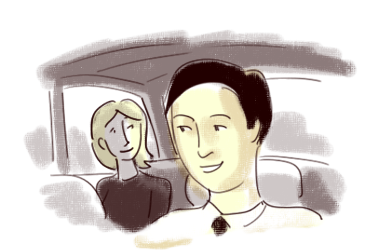
Lilly White talks to Mr Zhang in the car on their way to the hotel. (part 1)
Click on either pinyin or characters to listen to individual words. The words are listed in the order in which they appear in the dialogue.
Hover the mouse over the Chinese characters for a second to see the pinyin version of that line. You can also click on the right-hand button for all pinyin to be displayed.
Mr Zhang:
您这是第一次来中国吗?
Lilly:
不是,这是第二次了,不过来上海是第一次。
Mr Zhang:
您上次去了哪儿?
Lilly:
我上次去了北京。我在北京工作了两年。
Mr Zhang:
是嘛?难怪您的中文说得那么好。您上次在北京是什么时候?
Lilly:
从2005年到2007年。
Mr Zhang:
那之前您一直住在英国吗?
Lilly:
是的,我和家人一起住在伦敦。
Mr Zhang:
您大学也是在伦敦读的吗?
Lilly:
对,我在伦敦大学读了本科。我毕业后工作了三年,然后又去美国读了硕士。
Mr Zhang:
您说您工作了三年,您在北京待了两年,第三年呢?
Lilly:
哦,第三年公司把我派去了日本,我在东京工作了一年。
Mr Zhang:
那您还会说日语吧?
Lilly:
是的,我会说一点点日语。
Mr Zhang:
哇,您可真是“读万卷书,行万里路”。
Lilly:
“读万卷书,行万里路”是什么意思?
Mr Zhang:
意思就是一个人读了很多书,学了很多知识,同时也去了很多地方, 看到了很多的人和事。
Lilly:
您过奖了。这次来上海工作,我还有点紧张呢。
Mr Zhang:
不用紧张。公司的人都很友好。您明天就开始工作吗?
Lilly:
是呀,明天一早我就要去公司报到,我十点要开会。
Mr Zhang:
辛苦。您进公司的哪个部门?
Lilly:
我进销售部,明天一早就要同经理见面。
Mr Zhang:
不用担心,您肯定没问题的。
Lilly:
谢谢您的鼓励!
Mr Zhang:
Is this your first visit (lit. is this your first time to come) to China?
Lilly:
No, it’s my second time, but my first time to Shanghai.
Mr Zhang:
Where did you go last time?
Lilly:
I went to Beijing last time. I worked in Beijing for two years.
Mr Zhang:
Did you? No wonder your Chinese is so good. When were you in Beijing?
Lilly:
From 2005 to 2007.
Mr Zhang:
And before that did you always live in England?
Lilly:
Yes, I lived in London together with my family.
Mr Zhang:
Did you go to university in London too?
Lilly:
Yes, I studied for my first degree at London University. After graduation, I worked for three years, and then I went to the States to study for a Master's degree.
Mr Zhang:
You said you worked for three years. You spent two years in Beijing. What about the third year?
Lilly:
Oh, the company sent me to Japan in the third year and I worked in Tokyo for a year.
Mr Zhang:
Then you can also speak Japanese?
Lilly:
Yes, I can speak a little bit (of) Japanese.
Mr Zhang:
Wow, you really 'read ten thousand books, travel ten thousand miles'.
Lilly:
'Read ten thousand books, travel ten thousand miles.' What does it mean?
Mr Zhang:
It means one has read many books, gained (lit. studied) a lot of knowledge, and at the same time one has been to many places and seen many people and things.
Lilly:
You're flattering me. I'm actually a bit nervous about coming to work in Shanghai this time.
Mr Zhang:
No need to be nervous. Everyone in the company is very friendly. Are you going to start working as soon as tomorrow?
Lilly:
Yes, I'll go to the office early tomorrow morning. I have a meeting at ten o'clock.
Mr Zhang:
You're hard-working. Which section of the company are you going to work in?
Lilly:
I'm going to be in the Sales Department. I'll meet my manager early tomorrow morning.
Mr Zhang:
Don't worry, you'll certainly be fine (lit. you certainly will have no problem).
Lilly:
Thanks for your encouragement!
These are notes about potentially difficult key expressions. They are listed in the order in which they appear in the dialogue. Hover the mouse over the words highlighted in blue for the corresponding word or phrase in the example to appear.
1. 第
您这是第一次来中国吗?Is this your first time to China?
第 is the marker for ordinal numbers. Simply put it before the number: 第二 second, 第三 third.
2. 我在北京工作了两年。
I worked in Beijing for two years.
Note that 在北京 (location) is put before 工作 (verb) and 两年 (duration) is put after the verb.
Location – at/in/on… somewhere: location + verb
Duration – for a certain period of time: verb + duration
e.g. 他在机场等了很久。He waited for a long time at the airport.
3. 是嘛?
是嘛 is it shows that the listener is a bit surprised. The difference between 是嘛 and 是吗 is that the latter is a question, expecting a yes/no answer, but the former is not, simply indicating that one's surprised.
4. 那之前您一直住在英国吗?
And before that did you always live in England?
a). 之前 means 'before'. Similarly, 之后 means 'after', 之间 means 'between'. 之 is the ancient Chinese word equivalent to the modern 的.
b). The verb 住 does not always follow the Location + verb + duration rule:
When there is no duration, the location follows the verb 住:
I live in London. → 我住在伦敦。
When there is duration, location is put before the verb as usual:
I lived in London for three years. → 我在伦敦住了三年。
5. 和……一起
我和家人一起住在伦敦。(lit. I lived in London together with my family.)
和……一起 means 'together with'. 和 here means 'with'.
6. 是……的
您大学也是在伦敦读的吗?Did you go to university in London too?
The structure 是……的 is used for emphasis. 是 is put before the part to be emphasized.
For example, in the sentence '我是在伦敦读的大学', 是 is put before 在伦敦 in London, thus putting emphasis on the location. The sentence literally means 'It is in London where I went to university'.
7. 把
第三年公司把我派去了日本。The company sent me to Japan in the third year.
The pattern of 把 structure is: subject + 把 + object + verb + result. It is used when the location or the status of the object is changed by the subject.
8. 可
您可真是“读万卷书,行万里路”。You really 'read ten thousand books, travel ten thousand miles'.
可 is used for exclamation purpose. It is often put before 真 really to emphasize the speaker's assertion.
e.g.今天可真热。It's really hot today.
9. 看到
看到了很多的人和事 …have seen many people and things
看 means 'to look at' and 看到 means 'to see'. 到 is used here as a suffix to indicate the outcome.
e.g. 看!Look! 看到了吗? Did you see?
10. 过奖
您过奖了。You're flattering me.
过奖 literally means 'overly praise'. It is another common way to reply modestly to a compliment.
11. 就
明天就开始工作。(I'll) start working tomorrow.
就 is used here to indicate 'soon', 'quick'.
Lilly's profile
Drag the correct words to complete the résumé about Lilly. Check your answers.
You require the latest flash player to view this activity

True or False
Decide whether the following statements are true, false or not mentioned in the dialogue 'Giving personal information'. Click on the audio button to hear each statement. You can also click on 帮助 to see the English translation. Check your answers.
hint 6
She does not know which department she’ll join.
check Answers
reset Answers