Talking about a future social visit
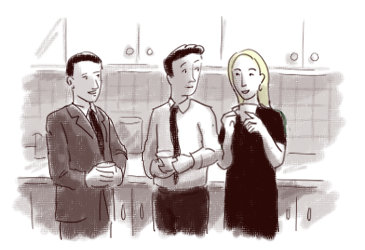
Leon, Lilly, and Chen are in the office tea room. Leon invites Lilly and Chen to his home on the following Saturday.
Click on either pinyin or characters to listen to individual words. The words are listed in the order in which they appear in the dialogue.
Hover the mouse over the Chinese characters for a second to see the pinyin version of that line. You can also click on the right-hand button for all pinyin to be displayed.
Leon:
小陈, Lilly, 这个星期六我想邀请你们来我家吃饭,好不好?
Chen:
这个星期六?是什么特别的日子吗?
Leon:
不是什么特别的日子,只是我太太前两天买了很多大闸蟹回来,我想请你们一起吃。我女儿这个周末正好在她外公外婆家。
Chen:
那太好了,谢谢你的邀请!
Leon:
不客气。Lilly,我希望你也能来呀!
Lilly:
当然好,只是麻烦你和你太太了。我听说过大闸蟹,还从没吃过呢。
Leon:
那你一定得尝一下,希望你会喜欢。
Chen:
你家在哪里,Leon?
Leon:
我家在中山公园附近 。我把地址给你们写下来。
(Leon writes down his address and Lilly reads it out.)
Lilly:
长宁路350号中山小区8号楼501室。从我住的地方怎么去比较方便?
Leon:
坐地铁最方便。你坐地铁二号线,在中山公园站下,从三号口出来,然后过马路就是。
Chen:
那挺容易找的,我也坐地铁去。
Leon:
小区大门就在地铁站的对面。你们一眼就能看到。大门的左边是一个便利店,右边是一个小面馆。
Lilly:
我要带什么东西吗?
Leon:
你们什么都不用带。我们家什么都有。
Lilly:
那谢谢你的邀请。我们几点到比较好?
Leon:
下午四点左右吧,我们先好好休息一下 。我的太太很想认识你们。
Lilly:
太好了。你的太太是做什么工作的?
Leon:
她在银行工作,她是个人理财咨询师。
Chen:
很有意思。我一定得好好同她聊聊!
Leon:
那么,星期六,说定了?
Chen:
说定了!
Lilly:
好的,谢谢你!
Leon:
欢迎到时候来我家!
Leon:
Xiao Chen, Lilly, I would like to invite you to my home for a meal this Saturday, is it OK?
Chen:
This Saturday? Is it a special day?
Leon:
It is not a special day, but my wife brought home a lot of Chinese crabs a couple of days ago and I’d like to invite you to eat them with us. My daughter happens to be with her grandparents this weekend.
Chen:
That’s great! Thank you for the invitation!
Leon:
You’re welcome. I hope, Lilly, that you can come as well!
Lilly:
I'd love to, if it's not too much trouble for you and your wife. I have heard about Chinese crabs, but I have never eaten them before.
Leon:
Then you must give them a try, I hope you’ll like them.
Chen:
Where is your home, Leon?
Leon:
My home is near Zhongshan Park. I’ll write the address down for you.
(Leon writes down his address and Lilly reads it out.)
Lilly:
Room 501, No. 8 Zhongshan Apartment Complex, 350 Changning Road. What would be the best way to get there from my place?
Leon:
The most convenient is to use the underground. You take Metro Line 2, get off at Zhongshan Park, come out through exit number 3, and then just cross the street.
Chen:
It sounds easy to find. I’ll use the underground too.
Leon:
The main entrance to the apartment complex is just opposite the metro station. You can't miss it. (lit. You can see it with one quick look.) There is a convenience store on the left of the entrance, and on the right, a small noodle bar.
Lilly:
Can I bring anything?
Leon:
You don’t need to bring anything. We have everything at home.
Lilly:
Thank you very much for the invitation. What time will you expect us?
Leon:
Around four in the afternoon so that we have plenty of time to relax first. My wife is looking forward to meeting you!
Lilly:
Great. What does your wife do?
Leon:
She works for a bank. She is a personal finance management adviser.
Chen:
That’s very interesting. I'll definitely need a good chat with her!
Leon:
So... Settled for Saturday?
Chen:
Settled!
Lilly:
OK, thank you!
Leon:
Welcome to my home then!
These are notes about potentially difficult key expressions. They are listed in the order in which they appear in the dialogue.
1. 什么
是什么特别的日子吗?Is it a special day?
不是什么特别的日子。It is not a special day.
我要带什么东西吗?Can I bring anything?
什么in the above sentences is not used as the question word 'what'. It is used to mean 'any-'. This particular usage of 什么 and other question words often occurs in closed questions (i.e. answered by either yes or no) and negative sentences. (see note 8)
2. 只是
只是我太太前两天买了很多大闸蟹回来。 (It is just that) My wife brought home a lot of Chinese crabs a couple of days ago.
只是麻烦你和你太太了。 If it's not too much trouble for you and your wife. (lit. It's just too much trouble for you and your wife.)
只是 in the above sentences literally means 'it's just that…'.
3. 正好
我女儿这个周末正好在她外公外婆家。 My daughter happens to be with her grandparents this weekend.
正好 means 'to happen, to occur by chance'. It can be used as an adverb, as in this example with the verb 'to be at' (lit. She is by chance at her grandparents). It can also be used on its own, meaning 'Fortunately! Just right!'.
4. 过
我听说过大闸蟹,还从没吃过呢。 I have heard about Chinese crabs, but I have never eaten them before.
过 is put after verbs to indicate finality, to show that the action has been completed and giving emphasis to the fact. 听说 means 'hear about' and 听说过 means 'have heard about'. To negate the sentence, put 没 before the verb. 从没 means 'have never'.
5. 得
你一定得尝一下 。You must (definitely) give them a try.
我一定得好好同她聊聊! I'll definitely need a good chat with her!
得 is pronounced děi when it means 'have to, must'. 一定得 gives an extra stress (lit. definitely must).
6. 小区
长宁路350号中山小区8号楼501室。Room 501, No. 8 Zhongshan Apartments, 350 Changning Road.
小区 (lit. small area) is used to describe a complex of flats. Alternative names are 花园 (lit. garden), 家园 (lit. homeland). Note that in Chinese addresses, units are given in the opposite order to English ones, i.e. street name and number + building number + room/flat number.
7. 就
过马路就是。 Just cross the street.
小区大门就在地铁站的对面。你们一眼就能看到。 The main entrance to the apartment complex is just opposite the metro station. You can't miss it. (lit. You can see it with one quick look.)
就 is used to emphasize that something can be done within a very short period of time or with ease.
8. 什么都
你们什么都不用带。 You don't need to bring anything.
我们家什么都有。 We have everything at home.
什么都 here is used as the indefinite pronoun 'anything, everything'. It is composed of the question word 什么 'what' and 都 'all, both'. (see note 1)
9. 好好
我们先好好休息一下 。 We will have plenty of time to relax first.
我一定得好好同她聊聊! I'll definitely need a good chat with her!
好好 is used as an adverb, meaning 'fully', 'to one's heart's content', 'as much as one wants'.
Please note that in a colloquial register, one-syllable verbs such as 聊 are often repeated.
Also note that 好好 is pronounced hǎohāo, the second part in a first tone.
10. 师
她是个人理财咨询师。 She is a personal finance management adviser.
师 master is often used as a suffix for professionals or people with certain skills. 咨询师 is a consultant (lit. consulting master). More examples are: 工程师engineer (lit. engineering master), 讲师 lector (lit. talking master), 摄影师 photographer (lit. photography master), etc. Another suffix for professionals is 员 person: 售货员 shop assistant (lit. sell product person), 审计员 auditor (lit. auditing person), 服务员 attendant (lit. service person), 接待员 receptionist (lit. reception person), 演员 actor/actress (lit. acting person).
11. 说定
说定了!Settled!
说定 is composed of the action verb 说 to say and the resultative complement 定 to decide. It indicates that a result or a conclusion has been reached.
toggle feedback
Order the sentences
Listen to dialogue 'Talking about a future social visit' and put the following sentences into the sequence according to the dialogue. Click on the Chinese texts to hear the audios. Click on 帮助 if you need to access the English translations of these statements in the correct order.
1. Lilly and Chen accept Leon’s invitation.
2. Leon writes down his address.
3. Leon tells them how to get to his place.
4. Lilly asks if they need to bring anything.
5. Leon mentions that his wife works for a bank.
-
Lilly 和小陈接受Leon的邀请。
-
Leon 把他家地址写了下来。
-
Leon 告诉他们如何去他家方便。
-
Lilly 问是否需要带什么东西。
-
Leon 提到他的太太在银行工作。
check Answers
True or false
Listen to dialogue 'Talking about a future social visit' and decide whether the following statements are true or false. Click on the Chinese texts to hear the audios. Click on 帮助 if you need to access the English translations of these statements.
check Answers
reset Answers