Chinese rural dwellings
Chinese rural dwellings
The evolution from collective farming to household-based agricultural production has had some influence on village landscapes. Generally housing standards have improved dramatically but northern, central, and western China remain at a lower level of economic development than the coastal provinces. Whilst Chinese farmers do not own their land, they can now own their house and pass it on to their children. Hence there exists a certain family stability which is also helped by the tradition of married women moving in with their husband's family and becoming daughters-in-law as well as wives.
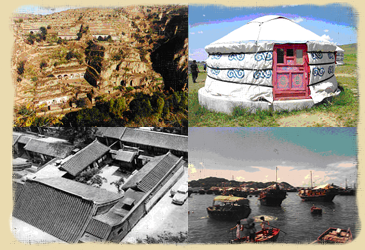
The People's Republic of China officially recognises 56 distinct ethnic groups and this is reflected in the varied rural housing architecture. For example, traditional country dwellings can vary from cave buildings to houseboats etc.
Cave buildings
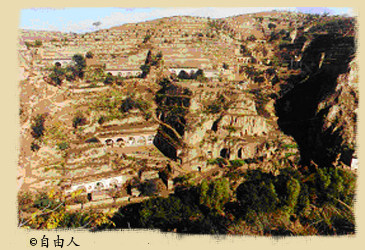
窑洞
Cave buildings on the Loess Plateau in the northwest of China, where trees and stones are scarce.
Yurts
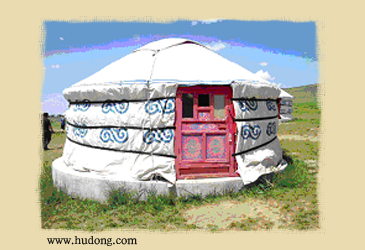
蒙古包
Yurts in Inner Mongolia where nomadic people live.
U-shaped traditional houses
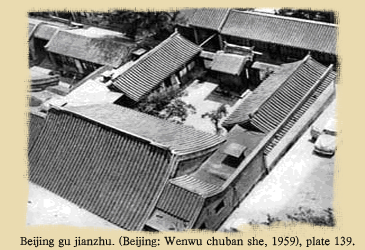
U型房屋
U-shaped traditional houses with walls made of bricks or pounded earth and roofs made of tiles, bamboo or thatch. Modern villages tend to respect the traditional architecture.
Houseboats

船屋
In the Chang Jiang Valley and in south China some fishing and boat transportation communities continue to live on their vessels, like they do in Hong Kong.