Shopping in China
Is China really that cheap?
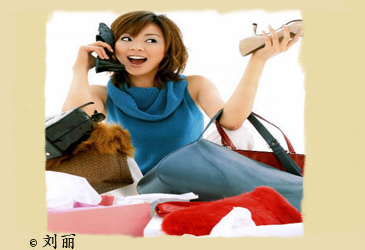
It is a common conception that China is the home of cheap eating, cheap shopping and cheap living. It's certainly true that you can buy a big bowl of noodles from a street food stall for the same price as a bag of crisps in the UK. However, visitors to China's larger cities might be a little disappointed when their wallet of yuan doesn't stretch quite as far as they had hoped.
Big-name shops and restaurants on major high streets such as Beijing's Wangfujing 王府井 and Shanghai's West Nanjing Road 南京西路 usually have prices comparable to those in the UK. In fact, some top-end fashion brands or international chains like Starbucks are often significantly more expensive in China than in the Western world.
It is the local eateries and shopping outlets that reveal a truer insight into the real cost of everyday living in China. Household goods and groceries can typically be picked up for about half the price of what you would have to pay in the UK. Large foreign supermarkets such as Carrefour 家乐福, Auchan 欧尚, Tesco 乐购, Walmart 沃尔玛 are also places where people do their everyday shopping. But things are changing fast in China and with an ever bigger percentage of the population becoming more and more affluent, the cost of living is showing an increased price curve. For example, house prices in Shanghai are now skyrocketing and reaching or overtaking those in major Western cities.
Bartering
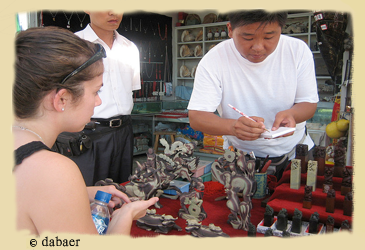
Bartering is part of the Chinese way of life when buying products from street vendors or in a market place and also in a lot of small shops. Negotiations are held in a polite and patient manner and should be enjoyable for both parties. As a general rule of thumb, a decent result will reduce the opening price by one third, and sometimes even two thirds. When the seller announces the opening price, the buyer reacts with a 太贵了! (It's too expensive!) reply. Discussion follows about 打折 (a discount) in order to reach an appropriate price. If the trader agrees to reduce the price, a final 那好吧 (OK then) will settle the deal. Otherwise the buyer can try other competitive outlets 我再看看 (I'll look somewhere else.), or decide that the product is already so cheap that it is not worth a lengthy negotiation over it. In which case, and especially as a foreigner, one takes the risk of losing face!
Customer rights
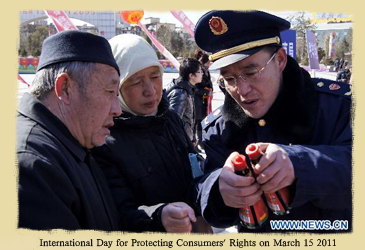
As a result of the baby milk scandal of 2008 that claimed 300,000 victims through the distribution of adulterated infant milk, China tightened its national regulations regarding product safety and food quality. The government acts through the State Administration of Industry and Commerce and the China Consumers' Administration which has many branches throughout the country. Recent actions have focused on consumer education, investigation into customer complaints and product testing.
On 15 March of each year various events are organised across the country to celebrate the International Day for Protecting Consumers' Rights.
Taobao, the Chinese version of eBay has introduced a service enabling consumers to make complaints against online sellers and expose users with poor credit history.
Nevertheless the government is still fighting counterfeiters who managed to distribute their goods for rock bottom prices in markets and back alleys. The problem is accentuated by the sheer size of the country. Foreign customers are always advised to use licensed retailers to avoid disappointment!