Popular Chinese souvenirs
Popular Chinese souvenirs
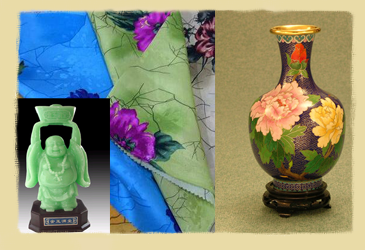
Since China opened its doors to the tourist trade and especially during the 2008 Olympic Games, the manufacture of traditional handcrafts based on ancestral practices has been promoted and the resulting trade contributes significantly to the Chinese economy. Here are a few examples of traditional crafts that tourists are encouraged to purchase:
Cloisonné
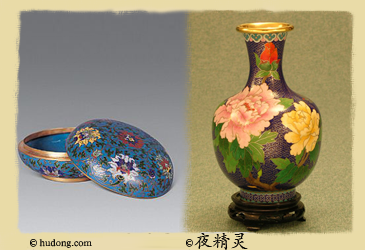
景泰蓝 Cloisonné refers to a particular traditional Chinese craft, and the 600-year-old techniques used to produce it. The artefacts can be either containers such as vases and boxes, or small pieces of decorative art or jewellery. Copper or gold wires are soldered on to bronze-based objects to create patterns and 'cloisons' (from the French meaning partitions), which are then filled with coloured enamels and sometimes other decorative items, such as gemstones, before being fired in a kiln. The enamels were traditionally of different shades of blue, hence the reference to 蓝 'blue' in the name. 景泰 alludes to the period 1450-1457 of the Ming Dynasty, when the popularity for cloisonné reached its peak.
This art form relies on the competence of highly skilled workers for whom no machinery can be substituted.
Silk
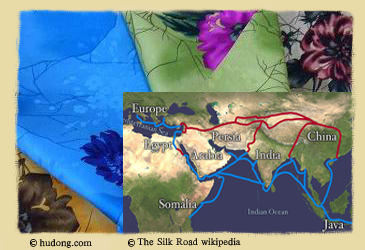
China started raising silkworms and making silk products as early as in the 27th century BCE according to Confucius. The export of silk products to west Asian and European countries became very successful during the first millennium BCE via the Silk Road 丝绸之路. Chinese silk merchants were very secretive about their know-how in order to preserve their trade monopoly.
Chinese silk products have always had a reputation for luxury all over the world. Silk pictures, fans, purses, together with silk scarves, shirts, quilts, etc., are chosen as typical Chinese gifts. They are traditionally given to visiting foreign dignitaries as a symbol of Chinese culture. Today China is the largest producer of silk in the world.
Tourists are encouraged to visit the cities of Hangzhou and Suzhou in the East of China where most of the silk factories and workshops are to be found.
Jade
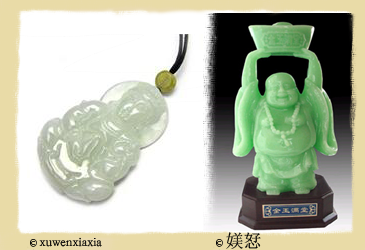
玉 jade is an ornamental stone which has been prized throughout China's history by all sectors of the population. Carvings can either be very intricate and exquisite and displayed in national museums, or made into modest pendants or bracelets to be worn in everyday life.
Popular pendants are usually shaped as Buddhas or as one of the twelve animal calendar signs. Chinese people like wearing a piece of jade as a pendant representing their birth year sign, 本命年, with a red thread (red being an auspicious colour). In olden times, people believed that jade could keep evil spirits away as it was thought to prevent body decay. Now the superstitions have been abandoned, but the love of the stone endures!