Unmissable Chinese shops
Zhang Xiao Quan scissors
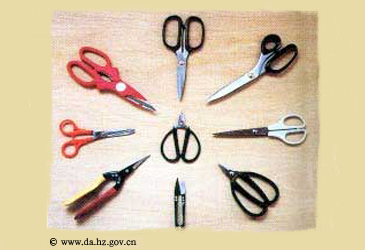
张小泉剪刀
Zhang Xiaoquan was a maker of scissors under the Ming Dynasty (1368–1644). He ran a shop in Hangzhou and earned his success thanks to the high quality of his scissors. All the scissors have sharp blades and are easy to use. They are available in many different designs for distinct usages. The brand now produces 120 types of scissors with no fewer than 360 specifications, including various specialist series like sewing scissors, office scissors, etc.
Tong Ren Tang pharmacy
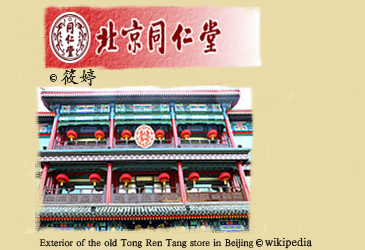
同仁堂制药
Established in 1669 this Chinese pharmaceutical company specialises in traditional Chinese medicine. It was a royal pharmacy for two centuries and has always enjoyed an enormous popularity. It originated in Beijing and has become one of the world's largest TCM (Traditional Chinese Medicine) companies, with products sold worldwide. Despite its motto 'Serving the people and cultivating benevolence' the company is a prime target for counterfeiters. Acupuncture and moxibustion, indispensable parts of traditional Chinese medicine, were added to the UNESCO Intangible Cultural Heritage list in 2010.
Quan Ju De restaurants
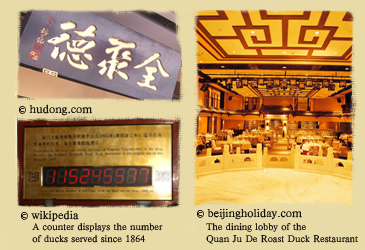
全聚德餐饮
The original Quan Ju De restaurant was established in 1864 in Beijing. Its founding chef became famous because of his roast duck dishes. Now a restaurant chain with many branches and franchises all over China, it is still renowned for its duck speciality, with 400 duck dishes on the menu. The original Beijing restaurant in Qianmen has become a major tourist attraction where many foreign country leaders have been entertained.
Rong Bao Zhai calligraphy and painting
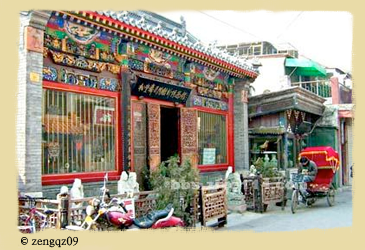
荣宝斋书画
Rong Bao Zhai means to take pride in making friends with people of noble aspirations. It started in 1672 as a stationery shop selling writing brushes, ink sticks, ink slabs and paper: the 'four treasures of studies' used in calligraphy. Today it is also an art gallery and a publisher specialising in the reproduction of paintings and calligraphic works using the traditional method of wood-block printing.
It is situated on the Liulichang street, the oldest street in Beijing, whose history goes back to the Yuan, Ming and Qing Dynasties. Today it is at the cultural heart of the city.