From Hangzhou to Beijing
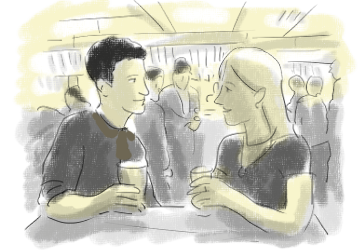
Lilly and Chen have just arrived in Beijing and are chatting in the bar of their hotel. They reminisce about their stay in Hangzhou and decide what they want to do in Beijing.
Click on either pinyin or characters to listen to individual words. The words are listed in the order in which they appear in the dialogue.
Hover the mouse over the Chinese characters for a second to see the pinyin version of that line. You can also click on the right-hand button for all pinyin to be displayed.
Chen:
我现在明白为什么杭州会被称为“人间天堂”了。西湖太美了。
Lilly:
哈哈,看来你也非常喜欢杭州呀。
Chen:
当然,那里应有尽有:山峰、湖水、名胜古迹、寺庙……
Lilly:
是啊,而且那里不仅有美景,还有美食。我已经开始想念西湖醋鱼了!
Chen:
哈哈,我觉得杭州是座很干净的城市,那里的人都很会生活、很友好。
Lilly:
的确是这样!你还记得我们在西湖边的茶馆里喝茶的时候,那些小朋友都来和我打招呼吗?太可爱了!
Chen:
你买了很多茶叶,打算寄给你的家人吗?
Lilly:
是啊,我的家人都很喜欢喝中国的绿茶,西湖龙井是最有名的绿茶之一!我自己也爱喝,所以才买了那么多。
Chen:
啊,我明白了。
Lilly:
我们现在到北京了。我们计划一下如何去长城怎么样?我们可以明天一早就去。一会儿我去酒店大堂问一下,看看这里有没有直接去长城的大巴。
Chen:
太好了!后天我们去故宫怎么样?故宫博物馆里有很多可看的东西。
Lilly:
好啊。我也很想去。小陈,你知道吗?有一次我看了一部纪录片,说故宫里一共有9000多间房间,如果一个人从出生起每天住一间房间,等他出来的时候已经25岁了!
Chen:
是吗?哇,我知道故宫很大,没想到有那么多房间呀!哦,对了,你知道北京有一个很酷的地方叫798吗?那是一个艺术区,有很多画廊、工作室、 时尚小店,书店…… 你住在北京的时候去过吗?
Lilly:
我以前的同事常常提起那个地方,我自己倒是没去过。听说那里以前是个工厂。我们去看看吧!要不我给我的朋友们打个电话,约他们在那里见面?
Chen:
好啊,我们可以一起吃饭。那里有不少酒吧和饭店。
Lilly:
太好了!我现在就去打电话!
Chen:
Now I can understand why Hangzhou is called 'paradise on earth'. The West Lake was very beautiful.
Lilly:
Haha, it seems you now love Hangzhou too.
Chen:
Of course, the place has got everything: mountains, lake, historic sites, temples…
Lilly:
Yes, and it not only has beautiful scenery, but nice food too! I am already missing the West Lake Vinegar Fish!
Chen:
Haha…I found Hangzhou a very clean city where everyone enjoys life and is friendly.
Lilly:
Indeed! Do you remember when we were drinking tea in the tea house by the West Lake and those kids all came to say hello to me? Wasn't it lovely?
Chen:
You bought a lot of tea there, are you going to post it to your family?
Lilly:
Yes, my family likes Chinese green tea very much, and the West Lake Longjing (lit. dragon well) Tea is one of the most famous green teas! I love it myself too, that's why I bought so much.
Chen:
OK, I see.
Lilly:
Now that we are in Beijing, shall we organise our trip to the Great Wall? We could go there first thing tomorrow morning. I'll go to the hotel lobby later and enquire if there are any coach trips organised.
Chen:
Great! What about going to the Forbidden City the day after tomorrow? The Forbidden City Museum has got so much to see.
Lilly:
Sure. I'd love that. Chen, do you know, I once saw in a documentary that there are over 9000 rooms in the Forbidden City. If a person stays in a different room every day of their life from the day they were born, by the time that person has slept in every room he or she would be 25 years old!
Chen:
Really? Wow, I knew the Forbidden City was very big, but I didn't think it would have so many rooms! Oh, by the way, do you know about a very trendy place in Beijing called 798? It's an artist area, with many galleries, workshops, fashion stores, book stores… Did you go there when you lived in Beijing?
Lilly:
My old colleagues talked a lot about it but I never went there myself. I hear that it used to be an old factory. Let's go there and check it out! Shall I ring my friends and arrange to meet them there?
Chen:
Sure, and we could have a meal together. There are quite a few bars and restaurants to choose from.
Lilly:
Great! I'll do that straightaway!
These are notes about potentially difficult key expressions. They are listed in the order in which they appear in the dialogue.
1. 应有尽有
那里应有尽有:山峰、湖水、名胜古迹、寺庙…… The place has got everything: mountains, lakes, historic sites, temples…
应有尽有 is a four-character idiom. It means 'there is everything (you can think of)', (lit. 'should | have | totally | have').
2. 不仅……还
那里不仅有美景,还有美食。It not only has beautiful scenery, but nice food too!
不仅 means 'not only' and 还 means 'also'. They often appear as a pair.
而且 meaning 'furthermore' can also be used in the second part of the sentence together with or instead of 还. e.g. 那里不仅有美景,而且(还)有美食。
3. 打招呼
那些小朋友都来和我打招呼。Those kids all came to say hello to me.
招呼 means 'greeting' and 打 is used as the verb to create the expression 打招呼 to say hello. It is a casual expression. Its synonym 问好 (lit. ask well) is more formal.
4. 之一
西湖龙井是最有名的绿茶之一。The West Lake Longjing Tea is one of the most famous green teas.
之一 means 'one of' and is always put after the noun.
5. 才
我自己也爱喝,所以才买了那么多。I love it myself too, that's why I bought so much.
The particle 才, following 所以 therefore, consolidates the relationship between cause and consequence. 才 emphasizes the fact that 'having bought so much' is the consequence of 'I myself like drinking it as well'.
6. 一……就……
我们可以明天一早就去。We could go there first thing tomorrow morning.
一……就…… means 'as soon as'. 一早就去 means 'to go as soon as early morning'.
7. 部
有一次我看了一部纪录片。I once saw in a documentary.
部 is the measure word for documentaries, films, etc.
一部电影 |
a film |
一部电视剧 |
a TV drama |
一部戏剧 |
a play |
8. 从……起
如果一个人从出生起每天住一个房间……If a person stays in a different room every day of their life from the day they were born…
从……起 means 'from'. 从出生起 means 'from the time he/she was born'.
By extension:
从昨天起 |
from yesterday |
从第一个人起 |
from the first person |
9. 没想到
没想到有那么多房间呀! I didn't think it would have so many rooms!
想到 means 'to think of', with 到 put after the verb 想 'to think' as the result indicator. Other examples with 到 used in this way are: 看到 to see, 听到 to hear, 买到 to get hold of (by buying).
没想到 is the negative form, 'to not think of'.
10. 对了
哦,对了! Oh, by the way…
对了 (lit. correct), is a fixed expression, used when one suddenly recalls something.
11. 过
你住在北京的时候去过吗?Did you go there when you lived in Beijing?
The aspect marker 过 conveys the meaning that the action of the verb has already been experienced in the past. It is put after the verb 去 to go.
12. 倒是
我以前的同事常常提起那个地方,我自己倒是没去过。My old colleagues talked a lot about it but I never went there myself.
倒是 is an adverb, indicating contrast: 'although my former colleagues mentioned the place a lot, I myself have not been there once'.
13. 要不
要不我给我的朋友们打个电话?Shall I ring my friends?
要不 means 'what about' and is used to introduce a suggestion or an idea.
14. 约
约他们在那里见面。Arrange to meet them there.
约 means 'to ask or invite in advance'. It is used with the following pattern:
约 + somebody + to do something.
他昨天约了我出去玩。He asked me yesterday to go out.
他约我明天去看电影。He asked me to go to the cinema tomorrow.
By extension:
约会 means 'a date'.
预约 means 'an appointment, a booking, to make an appointment'.
Lilly's phone call
Listen to Lilly's phone call to Manager Song and put the following interactions in the correct sequential order. Click on the audio buttons to listen to each statement given in the correct order. You can click on 帮助 to access the translations also given in the correct order. Check your answers.
-
The West Lake at Hangzhou is very beautiful.
-
There is not only beautiful scenery, but also nice food in Hangzhou.
-
Lilly and Chen drank tea in the tea house by the West Lake.
-
West Lake Longjing tea is a famous green tea.
-
Lilly and Chen plan to go to the Great Wall in the morning on the following day.
-
The hotel might run direct coaches to the Great Wall.
-
Lilly and Chen plan to go and visit the Forbidden City Museum in two days time.
-
Lilly once watched a documentary about the Forbidden City.
-
Beijing has a very special artistic area.
-
Lilly is looking forward to meeting her former colleagues.
check Answers