Reminiscing about the holiday
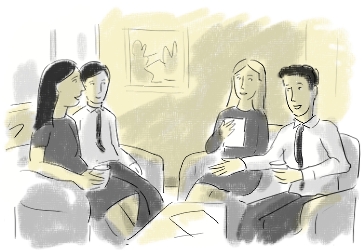
Chen and Lilly tell their colleagues Xiao Wu and Leon about their trip.
Click on either pinyin or characters to listen to individual words. The words are listed in the order in which they appear in the dialogue.
Hover the mouse over the Chinese characters for a second to see the pinyin version of that line. You can also click on the right-hand button for all pinyin to be displayed.
Wu:
莉莉,小陈,你们去旅游玩得怎么样呀?快跟我们说说!
Lilly:
我们玩得很开心,去了很多地方。我们先去了杭州,然后从杭州飞去了北京,又从北京去了西安,接着去了海南岛,最后从海南岛直接飞回了上海!
Wu:
哇,你们去了那么多地方呀!都玩了些什么?
Lilly:
在杭州的时候,我们坐在西湖边喝龙井茶,西湖漂亮极了!杭州真的是“人间天堂”。那座城市很干净,人们都很会生活,很友好。
Leon:
莉莉,你以前在北京工作过,这次又去觉得变化大吗?
Lilly:
大!北京又造了很多高楼,很多老房子都拆掉了。小陈带我去了798。那是一个艺术区,我以前没去过。
Wu:
你和以前的老朋友见面了吗?
Lilly:
见了!我们一起吃了顿饭,我很高兴能有机会再同他们见面。
Chen:
我们还去了长城!我们两个都获得了一份登上长城的证书!
Wu:
哈哈,那你们现在都是好汉了!
Everyone:
哈哈哈哈。
Leon:
你们在西安的时候肯定看了兵马俑吧?觉得怎么样?
Lilly:
非常壮观!我们去了那个最大的展区,里面有7000多个兵马俑。
Chen:
我倒觉得它跟我想象的有点儿不同,我们只能站在高处从上往下看,所以我离得太远,看不清每个兵马俑的细节,我觉得有点可惜。
Leon:
还有没有别的好玩的事儿?
Lilly:
对了,我们在海南的时候我潜水了!我们沿着那条七公里长的海滩散步,我们还吃了一顿非常棒的海鲜大餐!我拍了很多照片。我明天会带来公司给你们看!
Wu:
看来你们真是玩得很开心呀!太好了。我最近在考虑春天去西藏自助游,要不我们大家一起去吧?
Leon, Chen, Lilly:
好啊!好啊!好啊! 好主意! 我要去!什么时候?
Wu:
Lilly, Chen, how was your holiday? Tell us all about your travels!
Lilly:
We had a great time! We went to so many places! We first visited Hangzhou, then we flew from Hangzhou to Beijing, and then from Beijing to Xi'an, after that we went to Hainan Island, and finally we flew back to Shanghai!
Wu:
Wow, you went to so many places! What did you do?
Lilly:
In Hangzhou, we had Long Jing tea beside the West Lake. The West Lake is stunning! Hangzhou really is a 'paradise on earth'. It is a very clean city, where people enjoy life and are friendly.
Leon:
Lilly, you used to work in Beijing, so when you went back this time, did you notice many changes?
Lilly:
Yes indeed! There are so many new buildings in Beijing and many old houses have been demolished. Xiao Chen took me to 798. It is an artist area. I had never been there before!
Wu:
Did you meet up with your old friends there?
Lilly:
Yes! We had a meal together. I am really happy that I had a chance to see them again.
Chen:
We also went to the Great Wall. We were both awarded a certificate for our climbing efforts!
Wu:
Haha, now you are a true man and Lilly is a true woman!
Everyone:
Hahahaha.
Leon:
When you were in Xi'an, surely you went to see the terracotta soldiers, right? What did you think?
Lilly:
Truly magnificent! We visited the biggest exhibition area, which contains over 7,000 terracotta soldiers.
Chen:
I actually found it quite different from what I had imagined. We had to stand on a platform (lit. a high place) and look down, so I felt I was too far away to see the details on each terracotta figure and that was a shame.
Leon:
Any other exciting experience?
Lilly:
Oh yeah, I went diving when we were on Hainan Island! Chen and I also walked along the 7 km beach and had a fantastic meal of seafood. I took many photos. I'll bring them to work tomorrow to show you!
Wu:
It seems you both had a really good time! That's great! I am considering organizing a trip to Tibet in the spring, why don't we all go together?
Leon, Chen, Lilly:
Yeah, yeah, yeah. What a good idea! I am all for it. When do we go?
These are notes about potentially difficult key expressions. They are listed in the order in which they appear in the dialogue. Hover the mouse over the words highlighted in blue for the corresponding word or phrase in the example to appear.
1. 得
你们去旅游玩得怎么样呀?How was your holiday?
我们玩得很开心。We had a great time.
得, 的, 地 are three particles with different grammatical functions.
| 得 | links the verb and the complement (of manner) |
| 那套房子装修得很漂亮。That flat is beautifully decorated. | |
| 得 | links the adjective and the noun |
| 他们是我以前的同事。They are my former colleagues. | |
| 得 | links the adverb and the verb. |
| 她轻轻地走了出去。She quietly walked out. |
2. 先……然后……又……接着……最后……
我们先去了杭州,然后从杭州飞去了北京,又从北京去了西安,接着去了海南岛,最后从海南岛直接飞回了上海! We first visited Hangzhou, then we flew from Hangzhou to Beijing, and then from Beijing to Xi'an, after that we went to Hainan Island, and finally we flew back to Shanghai!
先 first, 然后 then, 又 then, 接着 after that, 最后 in the end/finally are a group of sequential indicators. They are all put before the verb. 先, 又 come after the subject. 然后, 接着, and 最后 can come either before or after the subject.
3. 都 , 些
都玩了些什么?What did you do? (lit. All | played | some | what? )
As Lilly and Chen visited quite a few places and did many things, their colleagues are expecting to hear about them all, thus they use 都 all and 些 some, implying that they are expecting to be told a lot of things.
4. 拆掉
很多老房子都拆掉了。Many old houses have been demolished.
拆掉 means 'to pull down, to demolish'. Note that although this sentence is in the passive, there is no passive voice marker, e.g. 被. This is because when there is no ambiguity, the passive voice does not need to be formally indicated.
5. 倒
我倒觉得它跟我想象的有点儿不同。I actually found it quite different from what I had imagined.
倒 is used here as an adverb to indicate an opposite and/or unexpected situation. Note that it is pronounced as 'dào', whereas 倒 meaning 'to fall down' is pronounced as 'dǎo'.
6. 看不清
我离得太远,看不清每个兵马俑的细节。I was too far away to see the details on each terracotta figure.
看不清 meaning 'not to see clearly' is made up of the verb 看 to look, the complement of result 清 clearly, and the negative marker 不. Its antonym is 看得清 to see clearly.
7. 公里
我们沿着那条七公里长得海滩散步。We walked along the 7 km beach.
公里 is a traditional Chinese length measurement. 1公里 = 1千米 one kilometre.
8. 自助游
我最近在考虑春天去西藏自助游。I am considering organizing a trip to Tibet in the spring.
自助游 (lit. self | help | travel), means a self-designed itinerary and independent travel tour. The opposite is 随团游 (lit. follow | group | travel), meaning a package tour which is more common in China.
9. 要不
要不我们大家一起去吧?Why don't we all go together?
要不 means 'what about'. It is used to introduce a suggestion or an idea.
In which city?
Chen and Lilly chat with their colleagues about the places they visited. Select the city that each statement refers to. Click on the audio buttons to hear each statement. You can also click on 帮助 to access their English translation. Check your answers.
hint 1
Local people enjoy life and are friendly.
hint 2
It has many new buildings and many old houses have been pulled down.
hint 4
I had a meal there with some old colleagues.
hint 5
Unfortunately it is different from what I had imagined.
hint 6
We had a fantastic meal of seafood in one of the local restaurants.
hint 8
8. 那个最大的展区非常壮观。
The site's biggest exhibition area is really magnificent.
check Answers
reset Answers