China's food therapy
China's food therapy
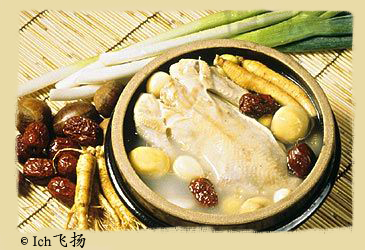
Chinese people believe that a balanced and nutritious diet is the foundation of good health and longevity. Some food can have a particular tonic or even curing effect, thus confirming the popular Chinese saying 药补不如食补 'Food is better than pills to keep healthy'.
According to traditional Chinese medicine, each food falls into one of five categories: cold 寒, cool 凉, neutral 平, warm 温, and hot 热. Note that this classification does not refer to temperature, but to attributes. While different foods have respective nutritional values, cold/cool food is effective for reducing fever, cooling blood, clearing infections and toxic substances. Hot/warm food on the other hand is effective for eliminating chills, warming blood and nerve channels, clearing the digestive system and generally supporting the Yang function.
Common cool/cold foods include corn 玉米, radish 白萝卜, mushroom 蘑菇, celery 芹菜, asparagus 莴笋, orange 橙子, sprouts 绿豆芽, tomato 西红柿, cucumber 黄瓜, banana 香蕉, etc.
Common warm/hot foods include wine 酒, vinegar 醋, pepper 胡椒, black tea 红茶, carrot 胡萝卜, leek 韭菜, ginger 生姜, peach 桃, lamb 羊肉, peanut 花生, etc.
Nevertheless most foods in everyday life are neutral, being neither hot nor cold in character. They include rice 米, flour 面, milk 牛奶, yellow bean 黄豆, sweet potato 山芋, apple 苹果, pork 猪肉, carp 鲤鱼, Chinese cabbage 白菜, egg 鸡蛋, etc.
So when one has a fever or a cough, one should eat cold/cool food such as water melon or pear, but when one has a cold or a headache, one should take in hot/warm food such as ginger, spring onion, or black tea!