Discussing health
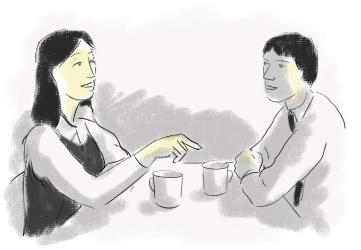
Chen and Wu are in the office tea room having a chat about their health problems.
Click on either pinyin or characters to listen to individual words. The words are listed in the order in which they appear in the dialogue.
Hover the mouse over the Chinese characters for a second to see the pinyin version of that line. You can also click on the right-hand button for all pinyin to be displayed.
Chen:
我最近总是觉得很累。
Wu:
我也是,我觉得自己很疲劳,脸色不好。
Chen:
最近天气也不好,公司里很多同事都感冒了。
Wu:
你说我们是不是处于“亚健康”状态啊?
Chen:
很有可能,现代人生活压力大,很多人都处于“亚健康”状态。
Wu:
就是。大家的工作都忙,平时没有什么时间运动,很多人饮食不规律,这对健康都不好。
Chen:
是的,大家都觉得工作第一,其实身体健康才是最重要的。
Wu:
完全同意!那些孩子们也一样,每天都有那么多作业,没有时间运动、和朋友们玩耍。
Chen:
而且他们喜欢吃垃圾食品,现在很多孩子都是肥胖儿。
Wu:
是啊,他们的学习压力也太大了。
Chen:
我觉得大家应该补充一下维生素。
Wu:
对,吃些维生素C吧,对增强抵抗力有好处。
Chen:
没错,但是我相信药补不如食补。我今晚去买些桂圆、红枣、和白木耳,用来做汤。
Wu:
这个不错啊,或者买些核桃和芝麻, 混在一起吃。这些都很有营养。
Chen:
我们平时还得注意饮食健康。不吃垃圾食品,不抽烟,少喝酒。
Wu:
是的,多吃水果蔬菜,多喝绿茶,多喝水!
Chen:
I am always feeling tired these days.
Wu:
Me too, I am always exhausted and my complexion is really bad.
Chen:
The weather has not been very good recently. Many colleagues in the office have got colds.
Wu:
Do you think we are all run down (lit. to be in sub-health status)?
Chen:
Very likely. Modern people suffer from heavy life pressures, and many of us become run down.
Wu:
Exactly. Everyone is busy at work, and has very little time left to do any sport. For a lot of people eating does not take place at regular times and this has a negative effect on their health.
Chen:
True, everyone gives priority to work, while health is actually the most important thing you have.
Wu:
I totally agree! It's the same with the children. They have too much homework every day and have not enough time to do sports or play with their friends.
Chen:
And they like eating junk food. Many children are now obese.
Wu:
Yes, the pressure from their studies is too high.
Chen:
I think everybody needs to take some supplementary vitamins.
Wu:
Yes, like Vitamin C, which is good for enhancing the body’s immunity.
Chen:
Yes, but food is better than pills to keep healthy. Tonight I am going to buy some longan, red dates and white wood ear mushrooms, to make some soup.
Wu:
That's not bad. You can also use walnut and sesame mixed together. These are both very nutritious.
Chen:
We really need to pay attention and have a healthy diet. No junk food, no smoking and less alcohol.
Wu:
Yes, eat more fruit and vegetables and drink more green tea and water!
These are notes about potentially difficult key expressions. They are listed in the order in which they appear in the dialogue.
1. 亚健康
你说我们是不是处于"亚健康"状态啊?Do you think we are all run down (lit. to be in a sub-health status)?
亚健康 is a newly-created word to refer to modern people's poor health status. 亚 means inferior, substandard. Thus 冠军 means first place, champion but 亚军 means second place, runner-up.
2. 对……不好
对对健康都不好。These all have a negative effect on health.
对……不好 means 'to be bad for'. 对 is used as the preposition towards. The opposite is 对……很好 to be good for.
3. 才
大家都觉得工作第一,其实身体健康才是最重要的。Everyone gives priority to work, while health is actually the most important thing you have.
才 is often used to confirm a statement when some other assumptions or options could be interpreted. It is used here to emphasise the fact that although people think work is the number one priority, it is health that is the most important.
4. 肥胖儿
现在很多孩子都是肥胖儿。Many children are now obese.
肥胖 means obese and 肥胖儿 refers specifically to overweight children.
5. 对……有好处
吃些维生素C吧,对增强抵抗力有好处。Take some Vitamin C, which is good for enhancing immunity (lit. towards enhancing immunity has benefit).
好处 means benefit. 对 is used here to mean towards.
The opposite is 对……没有好处 to have no benefit towards…, to be no good for…
6. 药补不如食补
我相信药补不如食补。I believe that food is better than pills to keep healthy.
药补不如食补 is a Chinese idiom. It reflects Chinese people's belief in the preventative effect of a balanced and nutritious diet.
7. 有营养
这些都很有营养。These are all very nutritious.
营养 means nutrition. By extension 有营养 means nutritious, (lit. to have some nutrition).
Similar words are:
| 意思 = meaning | 有意思 = interesting (lit. to have some meaning) |
| 钱 = money | 有钱 = rich (lit. to have some money) |
| 道理 = sense | 有道理 = sensible (lit. to have common sense) |
8. 得
我们平时还得注意饮食健康。We really need to pay attention and have a healthy diet.
得 is pronounced as děi and it means 'to have to'.
Lifestyle
Decide what contributes to a healthy lifestyle and what might result in an unhealthy lifestyle according to the dialogue. You can drag each option into the 帮助 box to access the pinyin. Drag your selection into the correct category. Check your answers.
You require the latest flash player to view this activity