Talking to an old colleague
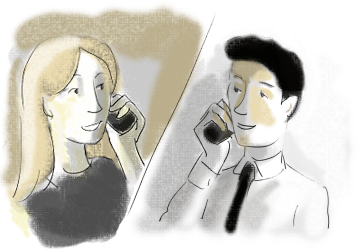
Lilly is very excited about an impending business trip to China as she can take this opportunity to visit her old colleagues and friends at the Xinhua Company. She is talking to Xiao Chen, her old colleague, to arrange a visit.
Click on either pinyin or characters to listen to individual words. The words are listed in the order in which they appear in the dialogue.
Hover the mouse over the Chinese characters for a second to see the pinyin version of that line. You can also click on the right-hand button for all pinyin to be displayed.
Lilly:
小陈!你好!我是Lilly!
Chen:
啊,是Lilly啊!好久没联系了,你打来太好了。你现在好吗?
Lilly:
还不错!你怎么样?我听Leon说你最近订婚了,恭喜你啊!
Chen:
哇,消息传得真快。谢谢你!
Lilly:
你的未婚妻是上海人吗?
Chen:
不是,小贤也是香港人,不过我们是在这里认识的。她在上海当英语老师。
Lilly:
哦,不错不错。你们打算在上海长期居住下去吗?
Chen:
是啊,我们都挺喜欢这里的,而且我们已经买了房子了。我们打算下半年结婚,也许安排在十一黄金周期间。
Lilly:
太棒了,你也终于成为“房奴”了!
Chen:
嘿嘿,我觉得长期租房也不是个办法,所以我想如果成家的话,还是有一个自己的小屋比较好。
Lilly:
那是,你现在是事业爱情双丰收,恭喜恭喜!
Chen:
哪里哪里。说说你自己吧。我听说你升职了,伦敦的工作还顺利吗?
Lilly:
挺顺利的。不过我好想念中国啊!我给你打电话其实是想说,我下个月要去上海出差了!你有时间的话我们可以聚一聚!
Chen:
那当然!你来上海几天?什么时候来?
Lilly:
我下个月10号到,是个星期四,我需要在上海的办事处工作三天,然后我会有两天的休息时间,我们可以利用那两天的时间见面!
Chen:
太好了,我组织我们销售部的同事聚餐吧!大家肯定都想再见你一次。
Lilly:
那就太棒了。谢谢你帮忙通知大家。我很期待同大家再次见面!
Chen:
那我们回头再聊。
Lilly:
好的!先这样吧!
Chen:
再见!
Lilly:
Hi, Chen! This is Lilly here!
Chen:
Oh, hi Lilly! We haven’t talked to each other for a long time. Nice of you to call. How are you?
Lilly:
Not bad, thank you, and yourself? I heard from Leon that you recently got engaged, congratulations!
Chen:
Wow, the news seems to have spread fast! Thanks very much!
Lilly:
Is your wife to be from Shanghai?
Chen:
No, Xian’s from Hong Kong like me, but we met here. She is working as an English teacher in Shanghai.
Lilly:
Oh, good, good. So do you plan to settle in Shanghai for the long-term?
Chen:
Yes, we both quite like it here, and we’ve already bought our own flat. We plan to get married in the second half of next year, perhaps during the ‘Golden Week’ starting from October 1st.
Lilly:
That’s great news! And you’ve finally become a 'house slave'!
Chen:
Hehe, I just think that long-term renting is not a good solution and if we want to start a family, I am happier having a place of our own.
Lilly:
You're right. You’ve done really well with your career and your private life! Congratulations!
Chen:
Thanks Lilly. But tell me about yourself. I heard you got a promotion. Is your work going well in London?
Lilly:
Yes, quite well but I do miss China! I actually called you because I will be coming to Shanghai on business next month! We could meet up if you have the time!
Chen:
Sure! How long will you be here? When do you arrive?
Lilly:
I will arrive on Thursday the 10th next month. I have to be in the office in Shanghai for three days, but then I have two free days, so we could meet up then?
Chen:
Perfect! That gives me time to organise a reunion meal with other colleagues from the Sales Department. Everyone will want to see you again!
Lilly:
That's great. Thank you so much for organising this. I’m looking forward to seeing everyone again!
Chen:
Talk to you again soon then.
Lilly:
OK! Bye for now!
Chen:
Bye!
These are notes about potentially difficult key expressions. They are listed in the order in which they appear in the dialogue.
1. 没……了
好久没联系了。 I haven't heard from you for a long time.
The end-of-sentence particle了 here co-exists with the negative marker 没, to indicate that the negative situation没联系 not contacting each other, is ongoing. It also implies that the fact of 联系 contacting each other, took place in the past.
2. 是……的
我们是在这里认识的。 We met here.
'是……的' structure is used to emphasise the specific information that comes after 是. Here Chen wants to put some emphasis on where he and his fiancée met, thus '在这里', here, put after 是 is stressed.
3. 下去
你们打算在上海长期居住下去吗? Do you plan to settle in Shanghai for the long-term?
下去, a directional complement, is used here after the verb 居住 to live at, to indicate the on-going state of the action.
请说下去。Please carry on talking.
你再这么工作下去会生病的。You'll get ill if you carry on working like this.
4. 了
我们已经买了房子了。 We've already bought our own flat.
There are two particles 了 in this sentence. The first 了, after the verb 买 to buy, indicates that the action is complete, i.e. the house-buying is done. The second 了, at the end of the sentence, indicates that the house-buying has had some impact on the current situation, it is part of the reason why they want to settle in the city.
5. 也
我觉得长期租房也不是个办法。 I just think that long-term renting is not a good solution.
也 here does not mean 'also'. It is used as an adverb put before the verbal part 不是, to soften the statement being made: Chen is talking about his personal preference thus he does not want to sound too absolute.
6. 还是
如果成家的话,还是有一个自己的小屋比较好。If we want to start a family, I am happier having a place of our own.
还是 here means 'had better'. 还是……比较好 indicates the better option.
我们还是换一家吧。 We'd better change (to a different restaurant).
我觉得还还是一家比较好。I think actually the first one (restaurant) is better. Note that 还是 , with the meaning 'or' is often used in questions with an alternative option.
你明天上午到还是下午到? Do you arrive tomorrow morning or afternoon?
7. 爱情事业双丰收
你现在是爱情事业双丰收! You've done really well with your career and your private life!
爱情事业双丰收 is a fixed expression. It is used to refer to someone’s achievements in various areas, such as love life or career. 双 means 'double'. 丰收 means 'harvest'. This expression literally means 'love life (and) career double harvest'
8. 还
伦敦的工作还顺利吗? Is your work going well in London?
还 here does not mean 'still'. It is used to suggest an eventual contrary situation to the one the speaker or the listener expects.
In this sentence, the speaker thinks that as Lilly just moved to London, she might have some difficulty adjusting to the new working environment, thus he asks his question, using 还, to show his concern, and also to make it easier for Lilly to tell him about any difficulty she might have encountered.
Another illustration of the use of 还 is when seeing someone fall down the stairs, you might ask '你还好吗?' lit. 'Are you OK?', as you think the person might be hurt. A similar question without the use of 还 would be 你好吗? Are you well? showing no sympathy.
9. 可以
你有时间的话我们可以聚一聚。We could meet up if you have the time!
我们可以利用那两天的时间见面! We could (use those two days to) meet up!
可以, can, is used here to make a suggestion. Note that between the three possible translations of 'can', 可以,会,and 能, only 可以 is used in this way.
那个海滩很漂亮,我们明天可以去走走。 That beach is beautiful; we can go there for a walk tomorrow.
10. 会
我会有两天的休息时间。 I will have two free days.
会,meaning can, is used to indicate that something is scheduled and definitely going to take place in the future. Note that 能 and 可以, both of which also mean 'can', are never used in this manner.
他下个星期就会回来了。He is going to come back next week.
11. 再
大家肯定都想再见你一次。 Everyone will want to see you again!
我很期待同大家再次见面! I'm looking forward to seeing everyone again!
我们回头再聊。 Talk to you again soon.
再 in these sentences means 'again'. Note that:
- 再 is used for actions in the future; while 又 which also means 'again', is used for actions in the past.
- 回头, lit. to turn one's head, means 'in a short while'.
True or false
Decide whether the following statements about Chen are true, false or not mentioned according to the dialogue 'Talking to an old colleague'. Click on the audio button to hear each statement. You can also click on 帮助 to access the English translations. Check your answers.
hint 5
5.小陈和小贤买的房子离公司很近。
The flat that Chen and Xian have bought is near his office.
hint 6
6.小陈和小贤已经搬入了新居。
Chen and Xiao have already moved into their new flat.
hint 7
7.小陈的婚礼安排在春节期间。
Chen's wedding is scheduled to take place during the Spring Festival.
hint 10
10.小陈打算等Lilly去上海了以后组织一次聚餐。
Chen is organising a meal for Lilly during her visit to Shanghai.
check Answers
reset Answers
toggle feedback
Chit chat
Listen to the five audio bites which are based on the dialogue 'Talking to an old colleague'. Now organise these English translations to match the original sequential order. You can click on 帮助 to access the Chinese transcripts. Check your answers.