To be taught, not to teach - Chinese visitors to the University enable cultural reflection
Imogen Whyte, BA (hons) Modern Languages (French & Mandarin), Department of Politics, Languages & International Studies
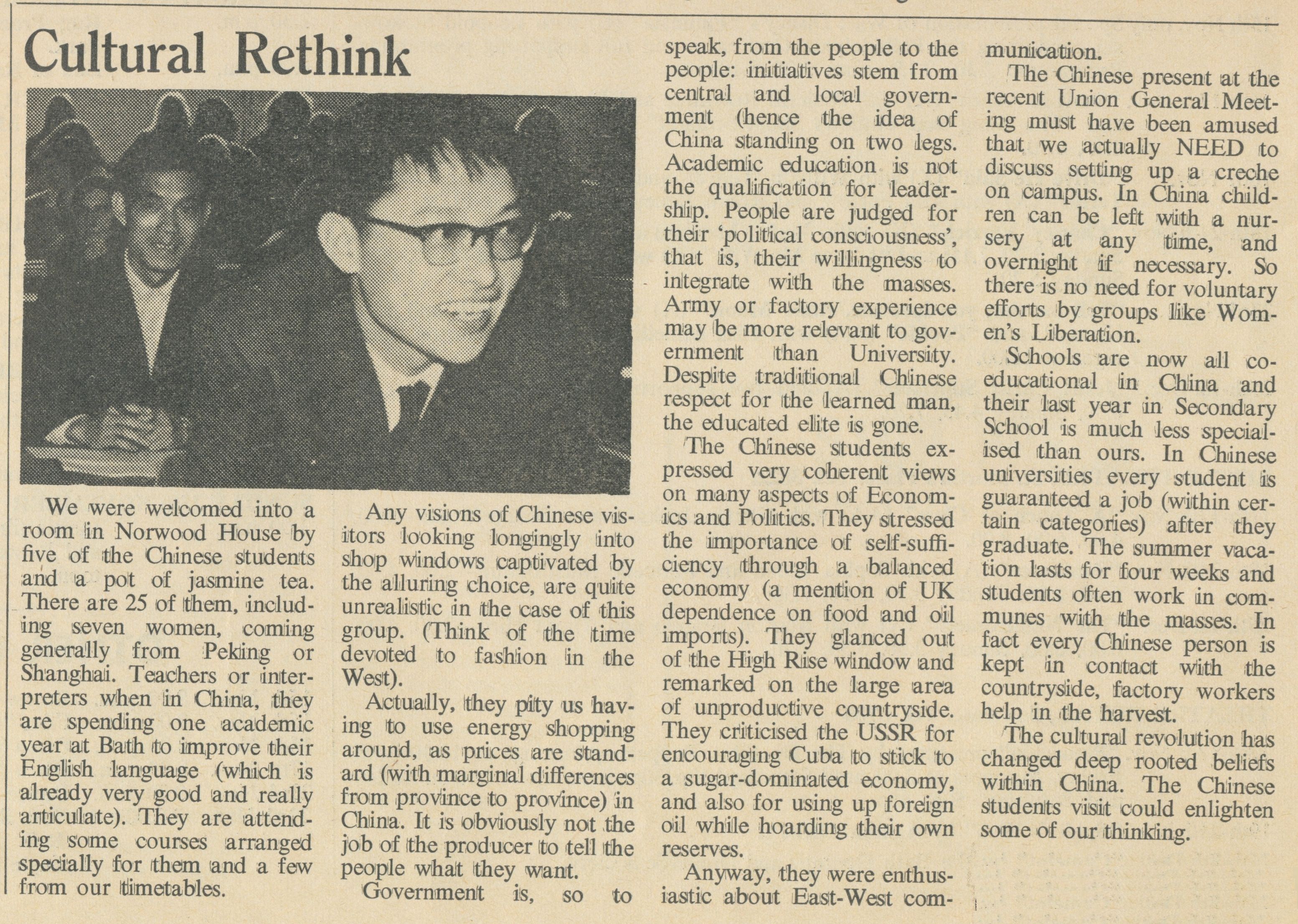
Imogen Whyte considers a long University of Bath tradition of connection and exchange with China.
It seems that the underlying realisation in this article is that the visit of 25 Chinese students in 1973 did not have the outcome that the university students may have expected, but perhaps one with even more promise.
The year 1973 saw the UK and China with contrasting societal structures and values, therefore it is crucial to acknowledge the context. Most notably, China was amid The Cultural Revolution under Mao Zedong, a period characterised by political instability and repression as China aimed to actively preserve communist ideologies. With university as a point of discussion, education became devalued in favour of manual work. The UK, on the other hand began to value education and higher education became more widely accessible in the 1960s-70s. Our university opened just 6 years before this article was written! This social divergence is commented on in the article with this visit presenting a unique opportunity to gain first-hand insight away from filtered media sources. The Chinese students expressed opinions that introduced an alternative lens through which Britain could reassess its understanding of China. Rather than viewing non-western societies as backward or in need of restructuring, Britain was encouraged to rather rethink its own approach and stereotypical assumptions about China.
In this article, the topic of education stands out, and the authors certainly make a conscious effort to use neutral language that ensures a report free of judgement. The Chinese students have explained how academia no longer amounts to political power in China and rather people are valued for their knowledge of political ideologies and loyalty to the CCP. Reading ‘the educated elite is gone’ made me pause when I first read it, but really it conveys the contrasting attitudes perfectly. China dismissed academic specialisation while the UK saw it as a marker of authority and progress.
The sentence about ‘shop windows’ shows how the authors’ attitudes were further opened to the foreign Chinese culture. Unlike the UK, China does not operate a society driven by consumer culture, so they do not care for flashy shop windows. Priorities evidently lay in different places; we can see a mutual intercultural understanding being discussed.
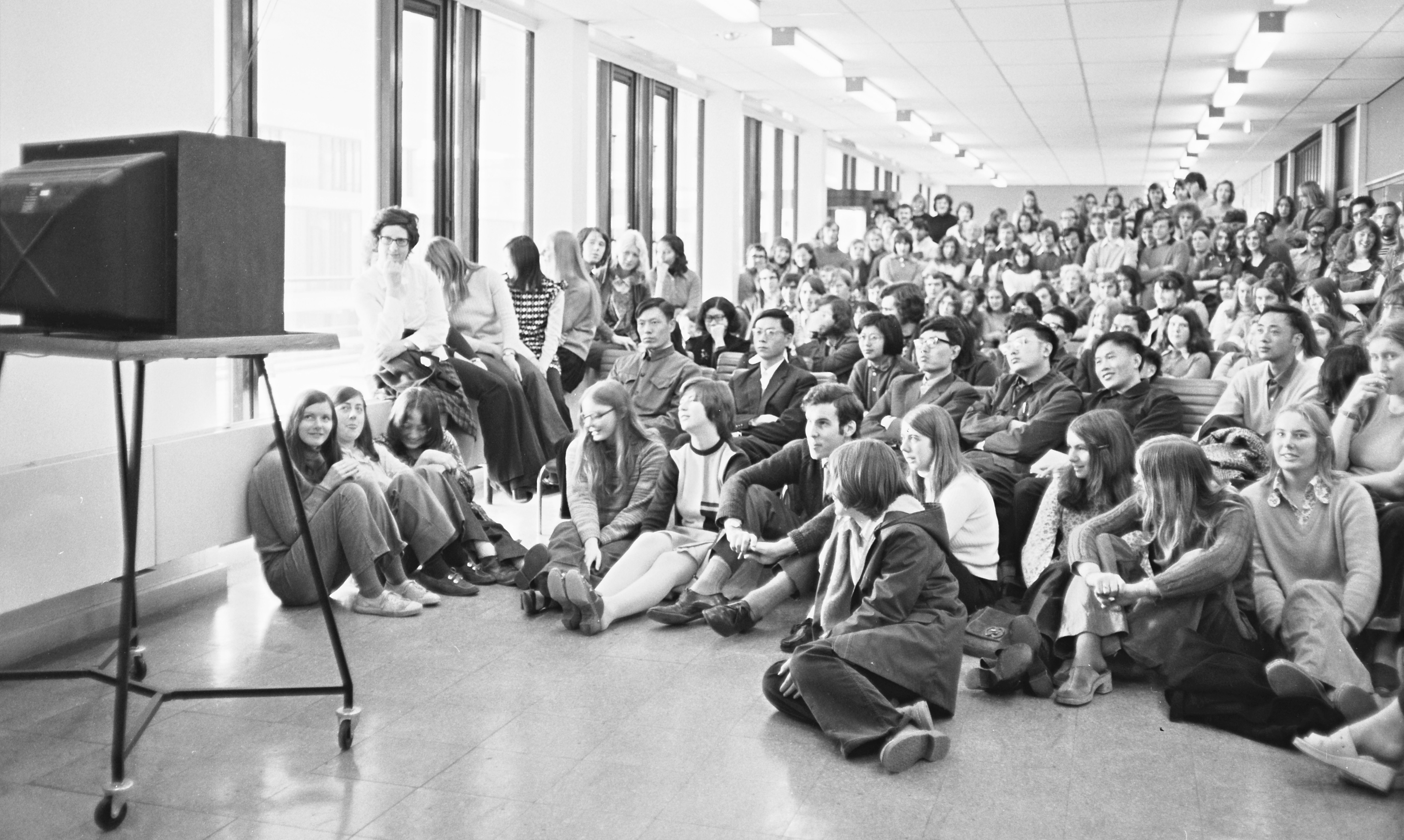
I enjoy how this article subtly prompted university students reading the paper to rethink how they would have understood and approached China in the 1970s. The visit clearly resulted in the Bath students learning from the visitors, when perhaps they would have expected only to take on a teaching role in teaching the Chinese students English. It appears they learnt that the British model is not universal, and China is equally important and relevant. Possibly an emerging attitude that would be difficult for 70s Britain to adopt, considering the recent imperialist history.
The article nicely foreshadows Bath’s thriving international scene, as, in 2026, we can reflect on how much these attitudes have positively evolved. The article is proof that the university has always valued international perspectives for its own enlightenment, which is just as significant today.