Supporting new societies for 60 years
Jamie Watts, MPhys (hons) Physics with Astrophysics with Professional Placement, Department of Physics, and Chair of the History and Archives Society (HistArc)
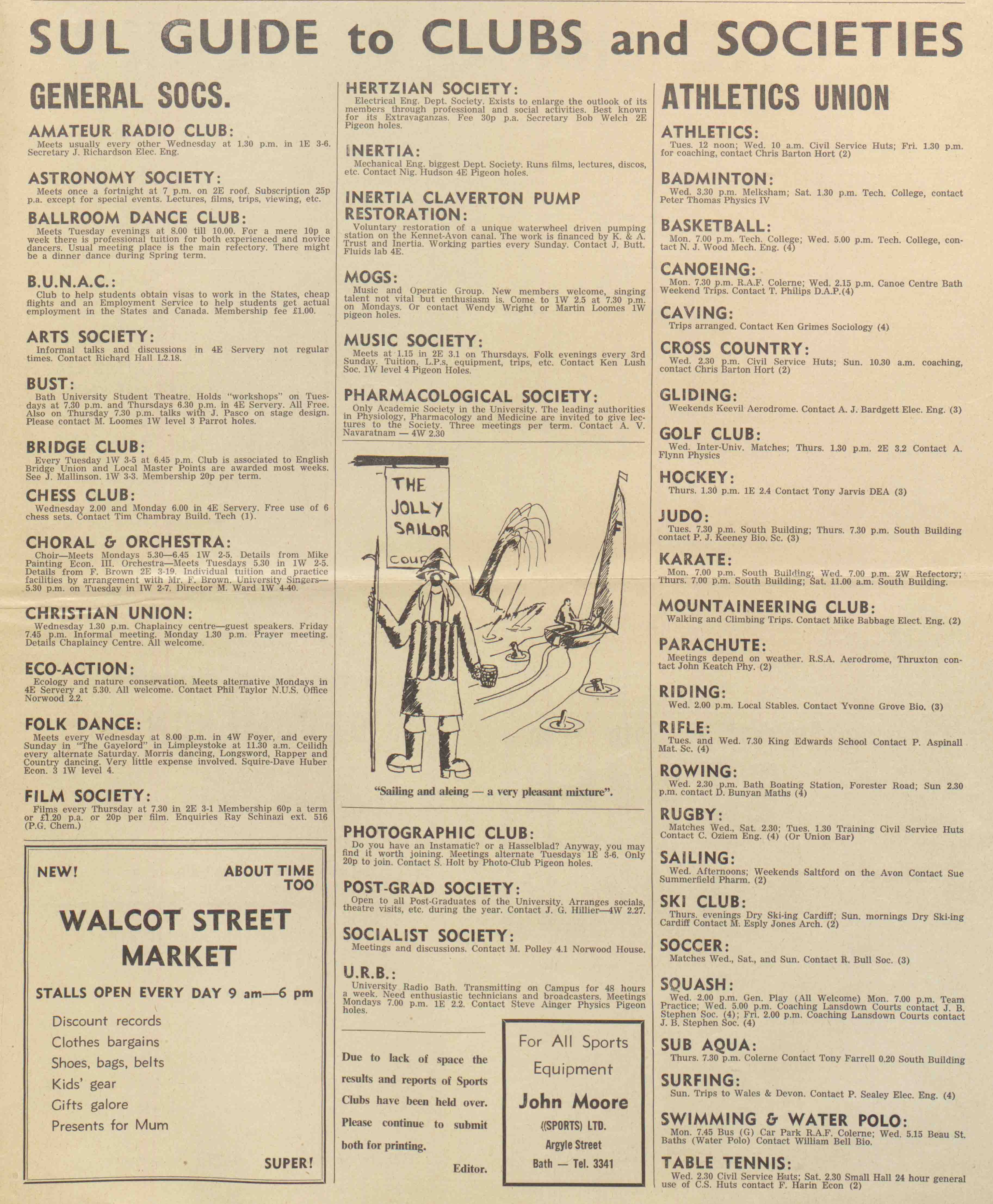
Jamie Watts offers a guide to the long history and expanding diversity of Students’ Union societies and clubs.
The number of Students’ Union (SU) affiliated groups has never been higher! This year, 214 student led groups are improving student life through sports, socials and hobbies. In the last 7 years alone, over 50 new student groups were established and began forming new communities. Although this is great news for everyone wanting to make new friends and try new hobbies, it presents a challenge to the SU who now need to support the rapidly increasing number of groups and events. The SU has faced similar challenges before as the University has grown over the past 60 years, so how has the SU supported new societies in the past and which of these societies still exist today?
Our oldest societies were created at the very beginning of our University’s history. Even back then there were a few groups that you may still recognise, like MusicSoc, PhotoSoc and FilmSoc as well as the football, hockey and rugby clubs. As the university grew during the 70s and 80s, so too did SU affiliated groups, with 117 clubs and societies by the 1984/85 academic year.
Key inspirations for many student groups were changes in technology and legislation. As the internet became more widespread in the 90s, societies eagerly started creating their own websites. More recently, new technology has continued to inspire groups like Bath Artificial Intelligence Society in 2022. Recognising this shifting landscape of interests, the SU has enacted various policies to accommodate the new groups. In 2020, the SU made joining multiple groups cheaper by introducing the societies area membership and SU sport membership. In 2022, the SU ran an Adopt-A-Society scheme, where students could volunteer to run societies with insufficient committee members to stay affiliated. The fact that the number of societies has increased alongside the number of students is clearly not a co-incidence. For better or for worse, the university continues to expand so we are likely to see even more student groups in the future.

In conclusion, it seems likely that the number of societies will continue increasing and the SU will be able to support all of the selfless committee members. However, SU support alone is not enough to keep the clubs and societies going. They also need new student volunteers to help run events, train freshers and campaign for positive change. Personally, I would encourage everyone to make the most of university by joining your favourite society or club. After all, without your input, they might not exist next year.
If you enjoyed learning about old societies, consider joining the History and Archives Society (HistArc), where we visit archives, tour historic sites and watch Horrible Histories! The research for this article would not have been possible without the support of HistArc and the University Archives.