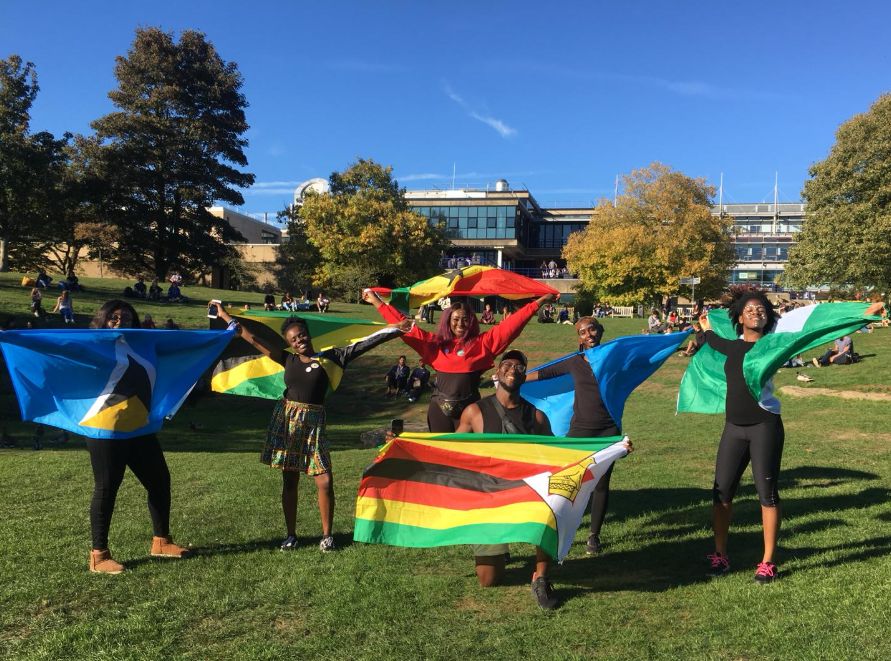
To create an atmosphere of security and love…
Maggie Fagbohun, BSc (hons) Sociology with professional placement, Department of Social & Policy Sciences
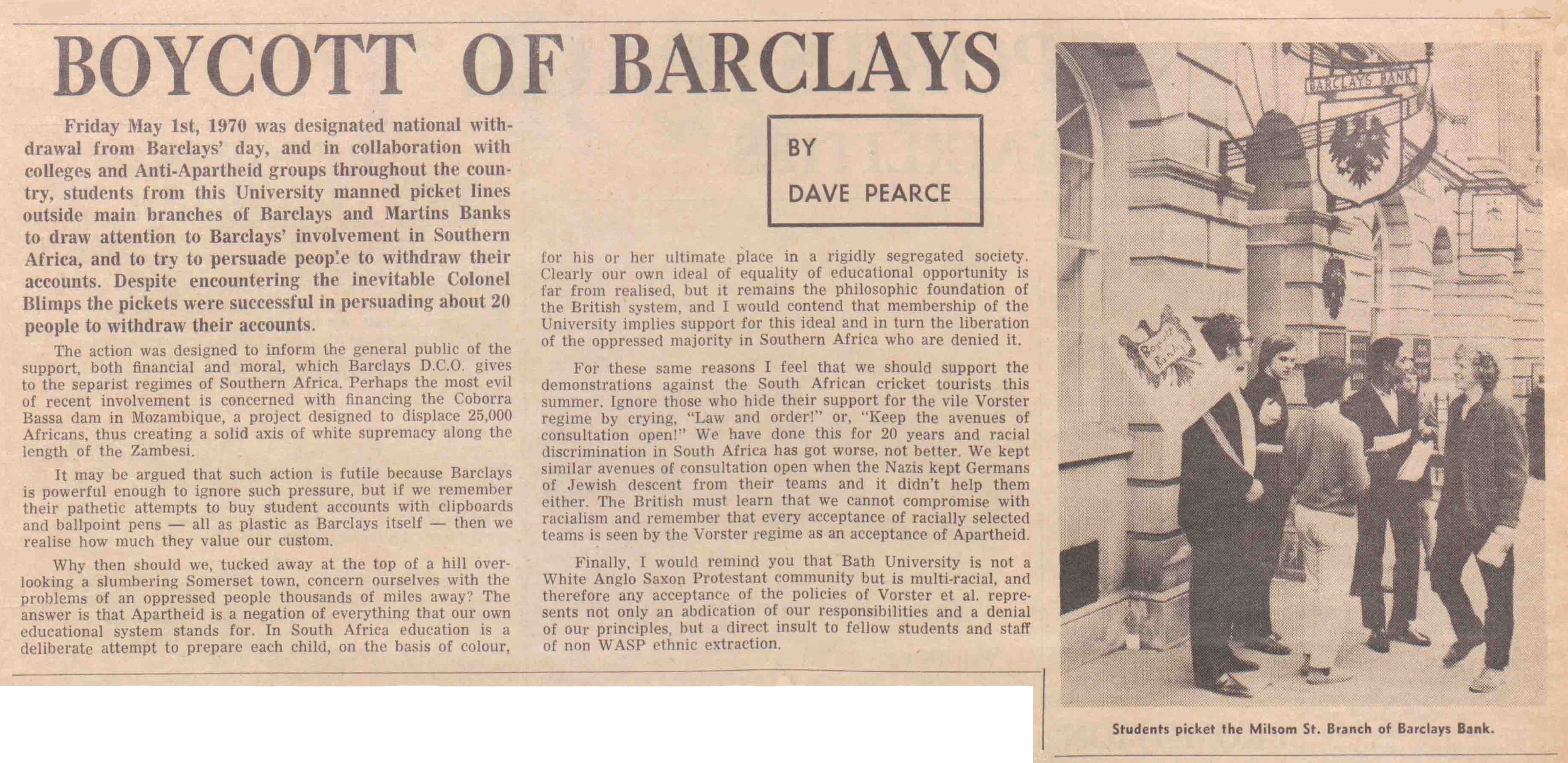
Maggie Fagbohun compares her experiences of joining, building and mobilizing the Bath community with those of her predecessors over fifty years ago.
“Finally, I would like to remind you that Bath University is not a White Anglo Saxon Protestant community but is multi-racial, and therefore any acceptance of the policies of Vorster et al. represents not only an abdication of our responsibilities and a denial of our principles, but a direct insult to fellow students and staff of non WASP ethnic extraction” This was written on the 7th May 1970.
Now I am in Bath, 56 years later, and this quote still rings true. It is a multi-ethnic community, though it remains a predominantly white city. The presence and visibility of national, racial, and ethnic diversity are more tangible than they once were, not only because of demographic change, but also due to active efforts to celebrate diversity and to be more inclusive and accessible. There has been a growth in participation, organisation, and community formation. I also find the shift in language over time significant. I had to search what “WASP” meant, whereas now terms like BAME or POC are more commonly used, reflecting changing ways of naming and understanding identity, even if the underlying sentiments have not entirely shifted.
What is notable, however, is a growing sense of collective activity and engagement. The African Caribbean Society (ACS), formally known as Africa Society, expanded its presence this year introducing “No Plates Like Home’ collaboration, bringing cultural foods to Lime Tree. Other societies have followed suit, with takeovers for Chinese New Year, Latin American food and more, creating visible and shared expressions of culture. The Black Students’ Network (BSN) functions as an important space for Black students to connect, feel supported and just to unwind and exist with no expectation or pressure. Recently, initiatives such as introducing Black hair products into Fresh have been particularly meaningful. Small changes like this make being Black in Bath feel less like an inconvenience or an added burden. Similarly, the inclusion of diverse hair salons within the Students’ Union reflects a growing awareness of everyday needs that have historically been overlooked.
Beyond this, there has been grassroots organising and political awareness. Whilst I have not personally seen protests such as those that took place on May 1st for national withdrawal against Apartheid, there still is an active effort and community. Protests outside the Library for Green energy, fundraising efforts for Sudan - including a potluck that raised £660 (tbc) - for UNHCR, and Congo, solidarity initiatives for Palestine, all point to a broader consciousness. With the rise of social media and technology, participation has also taken new forms; even writing this piece is, in itself, a way of engaging. These actions connect local experiences with global struggles just as they did in the 70s. I hope to continue showing up for these struggles, with courage, commitment and consistency.
Together these actions suggest a willingness from the University of Bath to move beyond passive recognition towards active forms of solidarity against racism, xenophobia and all other forms of injustice. Despite this, racism and microaggressions definitely and undeniably still do exist. The presence of groups such as Reform in Bath, alongside everyday experiences, like being “mistaken” for the only other Black girl in my first-year flat, having my hair touched without consent, or hearing the casual use of the n-word by non-Black peers serve as reminders of how much further there is to go. But like the Great Maya Angelou wrote, “Just like hopes spiralling high, still I rise”, I have found my community in Bath. I have found a sense of belonging among people who love, support, uplift, and ground me. I hope to continue having the courage to support my community, and the determination to sustain the rich and meaningful friendships I have built.
Sometimes it is the smaller things, access to haircare, shared music, finding someone with the same makeup shade and sometimes it is deeper: not having to explain every microaggression, being understood without translation. These moments contribute to the ongoing process of unlearning and self-definition, to living more consciously, and, as bell hooks writes, “to create an atmosphere of security and love and exemplify that in everything I do”.
Bath, to me, continues to live in an odd ongoing tension. It is a place where I have experienced racism. But it is likewise a place that I will call home for the next two years of my degree. A place with striking scenery, history and cultural preservation. A place where I have built my friendships, established my values and more. Bath, like a microcosm of the wider world; to understand it fully requires holding these realities together: acknowledging both the persistence of exclusion and the significance of the communities and movements, within and beyond the University, to challenge it.