The most radical thing we can be is hopeful
Anonymous,
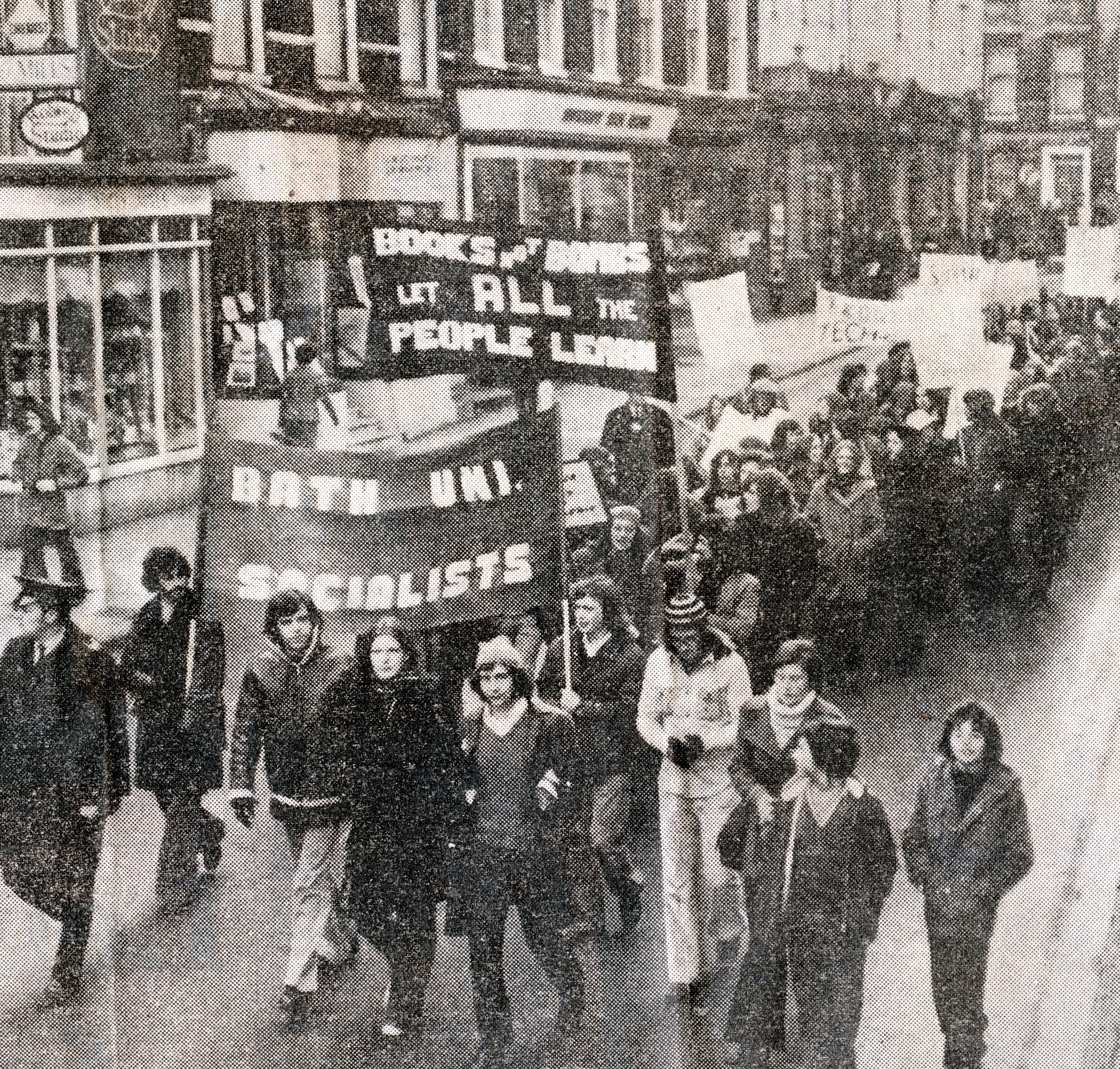
Anonymous explores class, identity politics and othering through the lens of their own undergraduate experiences.
Being working class at the University of Bath often felt like being the butt of a very unfunny joke. Before starting my first degree here in 2016, I had agonised over turning down other, more ‘prestigious’ universities out of a well-founded fear that I was simply too poor for them. But it had never occurred to me that the same feeling might come creeping in when I was only a few postcodes from my hometown.
The first indication that I was out of my depth was the sincere response of “oh my God, that must have been amazing!” when I told one of twelve new housemates that I had spent my gap year working in Iceland (it took us both a few seconds to figure out where we had gone wrong), but the second - and most pervasive - was when another took issue with my pronunciation of the city that I had practically grown up in: “You can’t say ‘Bath’ like it rhymes with ‘gaff’, you sound like an inbred.” The Wiltshire twangs in my accent have never been too overt; I had spent most of my life so far being made fun of for sounding “posh” because I pronounced the ‘l’ in ‘roll’ and said ‘aich’ instead of ‘haich’. But that didn’t seem to matter here, and I – perhaps inevitably, perhaps because there is an ugly sensitivity in me - spent the entirety of my undergraduate years feeling out of place because I made the mistake of enunciating four letters instead of five.
All aspects of identity are political, and yet I had never been politicised against my will until my time here. And it didn’t help my overwhelming sense of unbelonging that I was constantly working: one job, then two, and emerging as a triple threat by my final year, all the while missing out on birthdays and societies and the “relative luxury” that the author of this article presumes all students to have. Indeed, while we can safely assume that the figure of ninety-six percent of working-class youth never making it to higher education has plummeted, I would argue that the experiential - and oftentimes academic achievement - gap remains in full force.
The slashing of maintenance grants and the ever-increasing tuition fees and interest rates have proven a vicious tactic in this respect, designed to make mincemeat of the working classes while breeding a new generation of apathetic white-collar workers - the kind who will never go on strike, who will never acknowledge the extent of their own political blindness. It’s a combination of marketisation and atomisation that has proven lethal: from being unable to convince a single one of my fellow students to join the UCU picket, to witnessing an appallingly tone-deaf postgraduate comms campaign that led with the slogan “Earn to pay the bills or up your skills at Bath”, the lack of civic and political engagement among the community - the submission to the tenets of the positivist rot at the heart of our specific academic model - has broken my heart over the years.
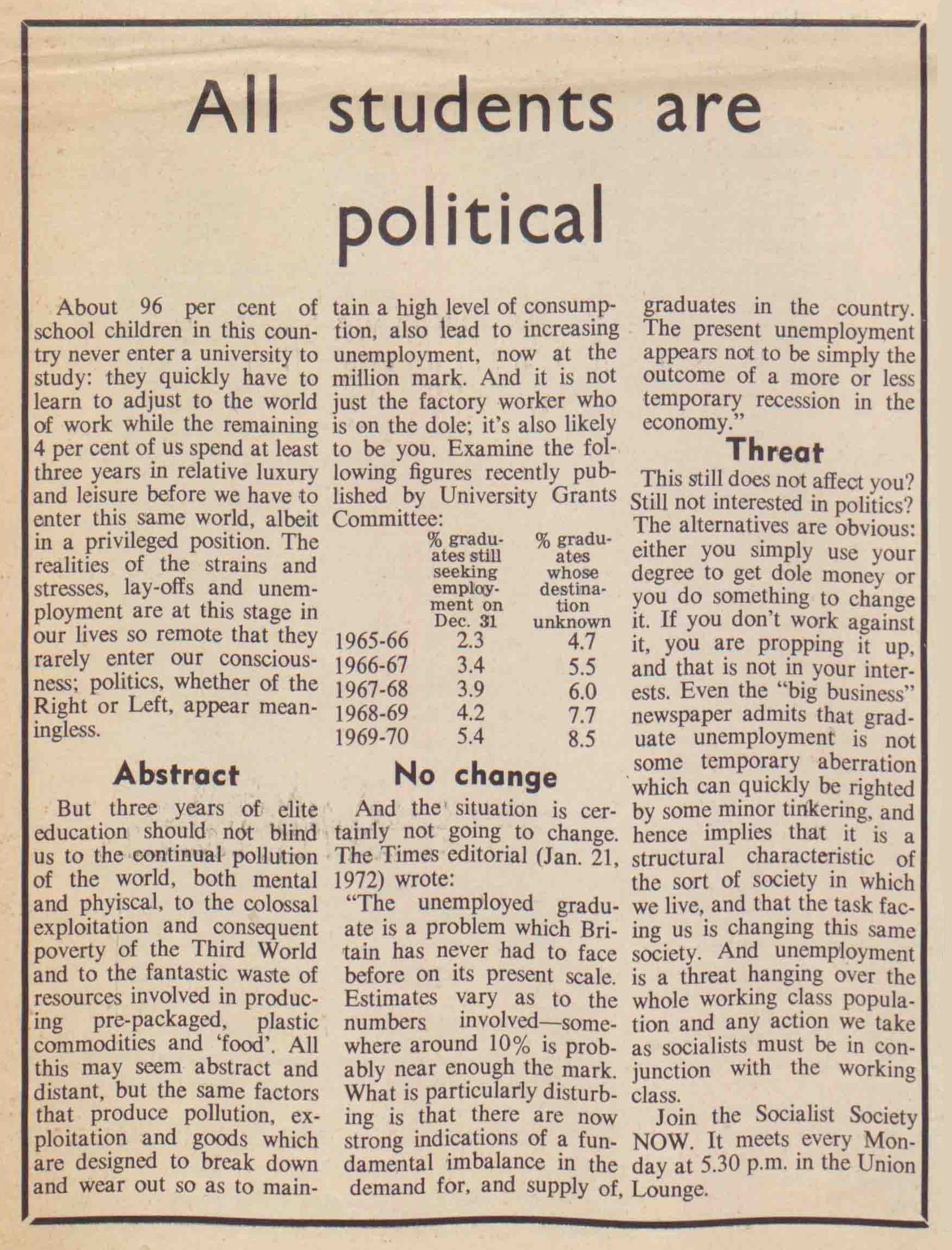
The author of this article seems to have some awareness of just how alien academia can seem to a first generation or working-class student, and I will always react like a dog to a doorbell with a mention of the world “solidarity”. But at the end of the day, it was a different time with a different demographic, where the participation of the working classes in higher education seemed more a pipe dream than a possibility, and therefore not something worth dwelling on. While the scales have tipped definitively in the working class’s favour in terms of enrolment, we remain the most affected by graduate unemployment - an issue that has stubbornly persisted since 1972, and shows no signs of slowing down.
A decade on from my first day on campus, however, the picture has evolved. I arguably now have all the makings of a middle-class monster: three degrees, a PhD sometime in the future, and a few research projects in the mix while I work an administrative role. I am fortunate in hundreds of ways, but I have also wasted years agonising over how much less I seem to know and understand myself as I pull an Educating Rita. Ironically, my accent has gotten slightly stronger, but where I had once felt shame about the way I said Bath, grass, ear (a different kettle of fish), I cling to it now because it feels like who I once was. I am forever trying to figure out if I am winning or losing, and if the changes I have wrought are the changes that I want.
Looking at my life and at the world today, at what kids like me can hope to inherit, I am more worry than hope. And yet the most radical thing we can be is hopeful, so I work at it. And sometimes the worry is outweighed by the goodness of the people I love: the people who run Bath Pride, who protest for Palestine, who run anti-fascist community workshops to share knowledge because they recognise that education belongs to everyone and not just those who can pay through the nose for it. It is outweighed by the goodness of my former academic supervisor now colleague who reminds me in every meeting that I what I do is worthwhile, of my favourite prof-that-never-was who snaps me out of my self-pity and sternly tells me I am good enough, of the few course-mates who have known the same life as me and who have struggled in the mud alongside me.
I grieve and celebrate my time at this university in equal measure, and leave you with the hopes that I have for the years still to come: I hope that students realise their inherent politicism and that the way they choose to interact with each other and their education has a staggering impact. I hope we reverse the marketisation of education and return to the pursuit of knowledge for passion’s sake - a privilege that neoliberalism has robbed from us all. And I hope against hope that a cry for solidarity rings out once more, and this time, is answered.