We use mathematics to gain fundamental insights into the processes that shape animal and plant development. From neural crest cell migration to pigment pattern formation, development arises from the interplay of cellular behaviours, gene regulatory networks, and molecular signalling.
By formalising complex biological data into mathematical models, we can test hypotheses, make quantitative predictions, and iteratively refine our understanding through collaboration with experimental biologists.
Mathematical approaches
We construct deterministic and stochastic models of developmental systems using a range of frameworks, including ordinary and partial differential equations, stochastic differential equations, agent-based models, and probability master equations.
Our work integrates reaction-diffusion theory, Turing instabilities, chemotaxis, travelling-wave dynamics, bifurcation theory, and nonlinear dynamics to connect mechanistic models with biological observations. Analytical methods are complemented by numerical simulation and stochastic analysis to explore pattern formation, collective cell behaviour, and developmental decision-making.
Applications
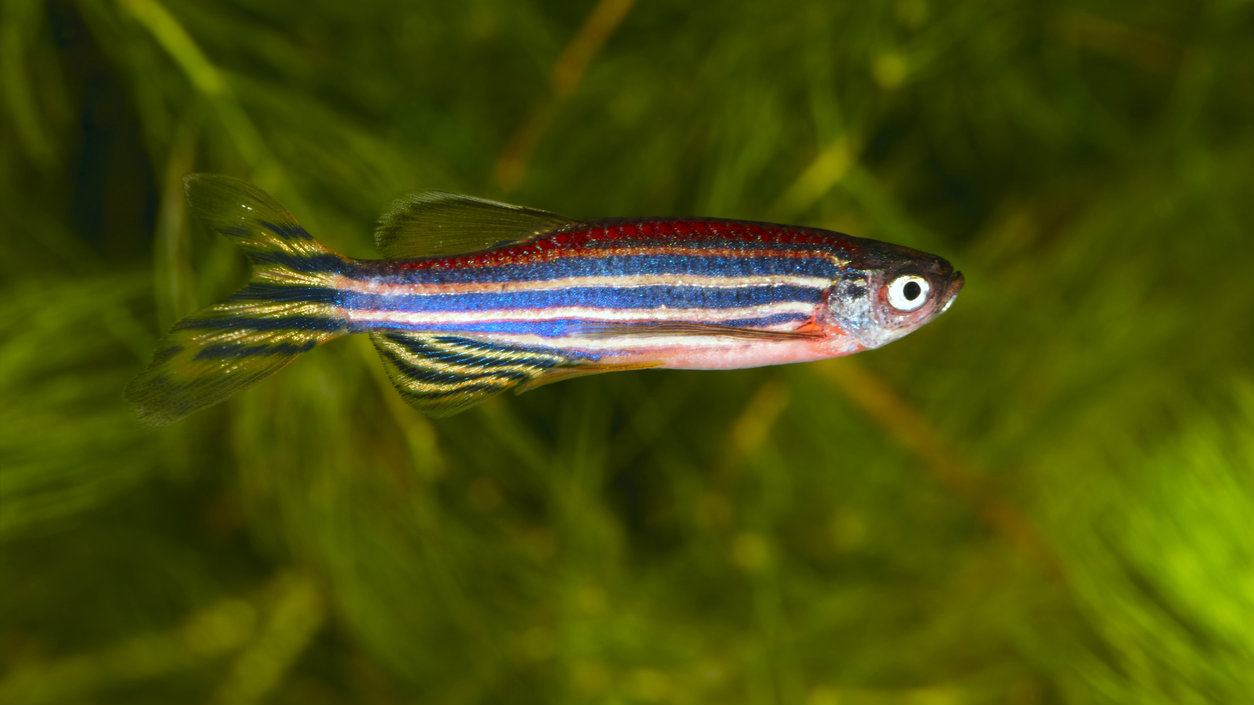
Our research addresses a broad spectrum of developmental phenomena, including neural crest cell migration and fate specification, pigment patterning in animals such as zebrafish, morphogen-driven patterning, gene regulatory networks, stochastic cell fate decisions, minimal models for pattern selection, and collective behaviour.
We also explore how development links to morphological disparity and macroevolutionary patterns. For example, our agent-based stochastic models of pigmentation have shown that certain defects arise from reduced proliferation of pigment-producing cells rather than migration failures, challenging traditional assumptions. Our zebrafish models reproduce both wild-type and mutant patterns and provide insights into the regulation and evolution of developmental programmes.
Staff working in this area
- Professor Kit Yates, Professor, Department of Life Sciences
- Professor Robert Kelsh, Professor, Department of Life Sciences
- Dr Hartmut Schwetlick, Senior Lecturer, Department of Mathematical Sciences